1. Detect

Tissue immune cells recognize local signals.
 Subscribe
Blood and lymph connect tissues with immune organs, transport cells and signals, and help protective responses reach the right place. The two networks work together but follow different routes.
Explore blood, lymph & immunity →The blood and lymphatic systems connect tissues, distribute signals and enable immune-cell movement. Each has distinctive transport and surveillance roles.
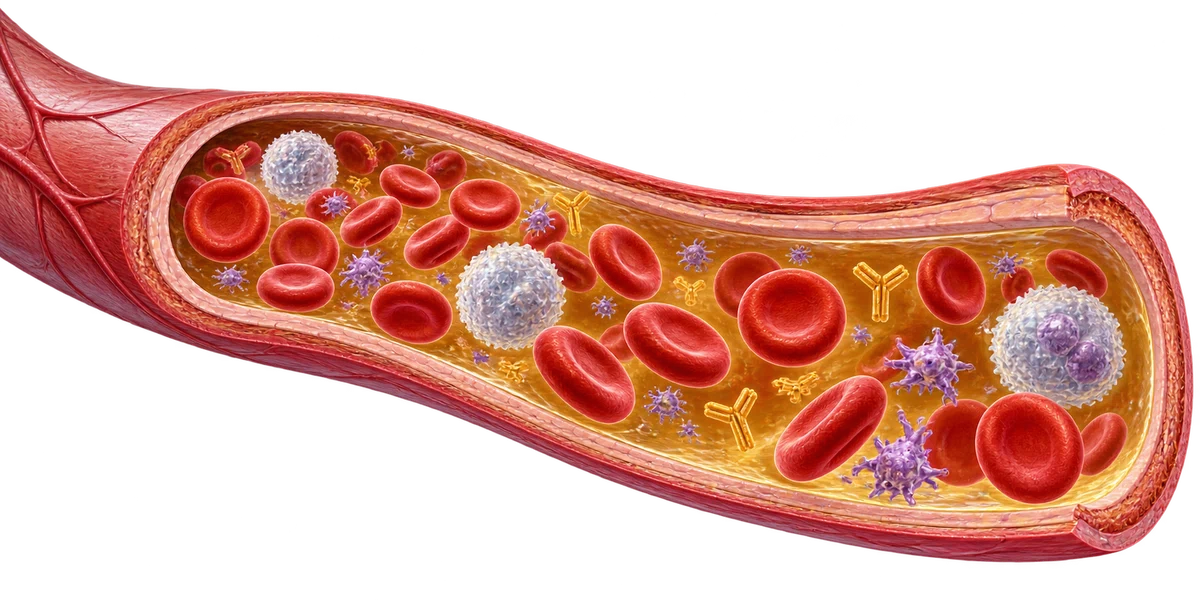
Plasma carries antibodies, complement and signaling proteins. Leukocytes circulate and can enter tissues when recruited. Red blood cells carry oxygen, while platelets support hemostasis and interact with immune responses.
Lymphatic capillaries collect interstitial fluid and carry antigens and migrating immune cells toward draining lymph nodes. Collecting vessels and valves direct flow; lymph ultimately returns to the bloodstream.
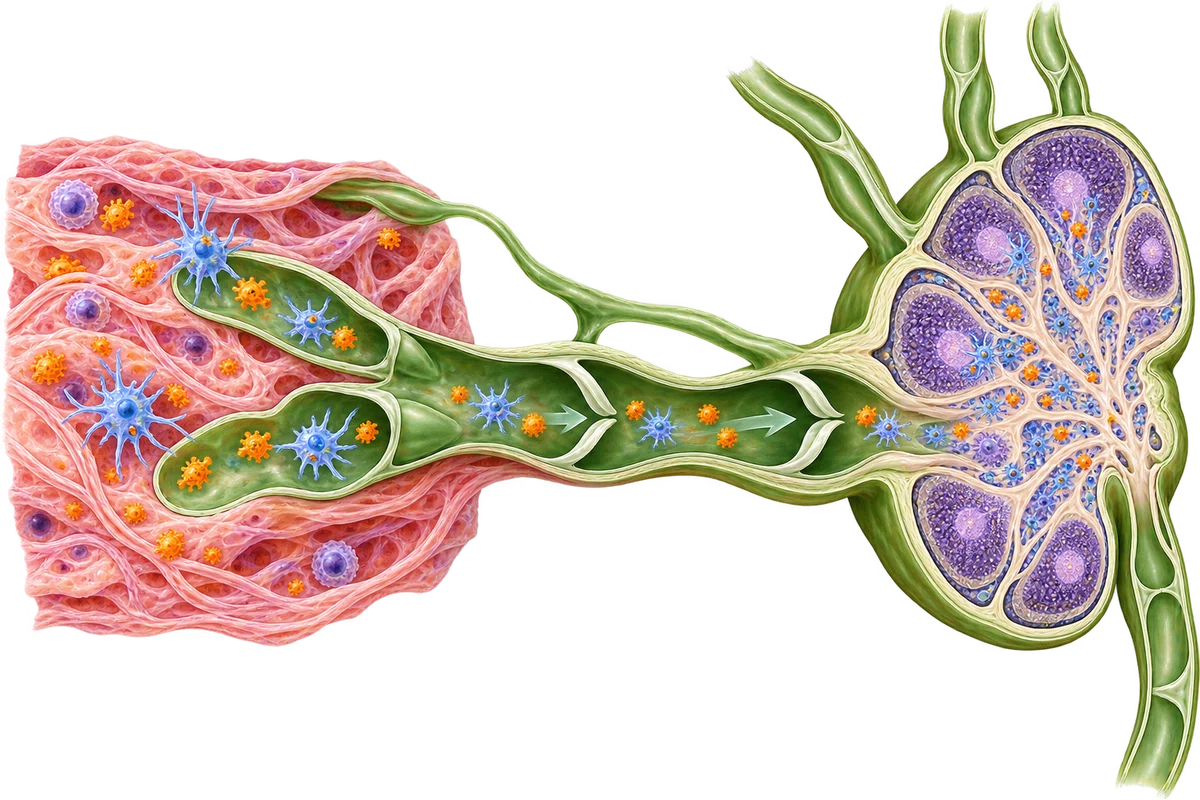
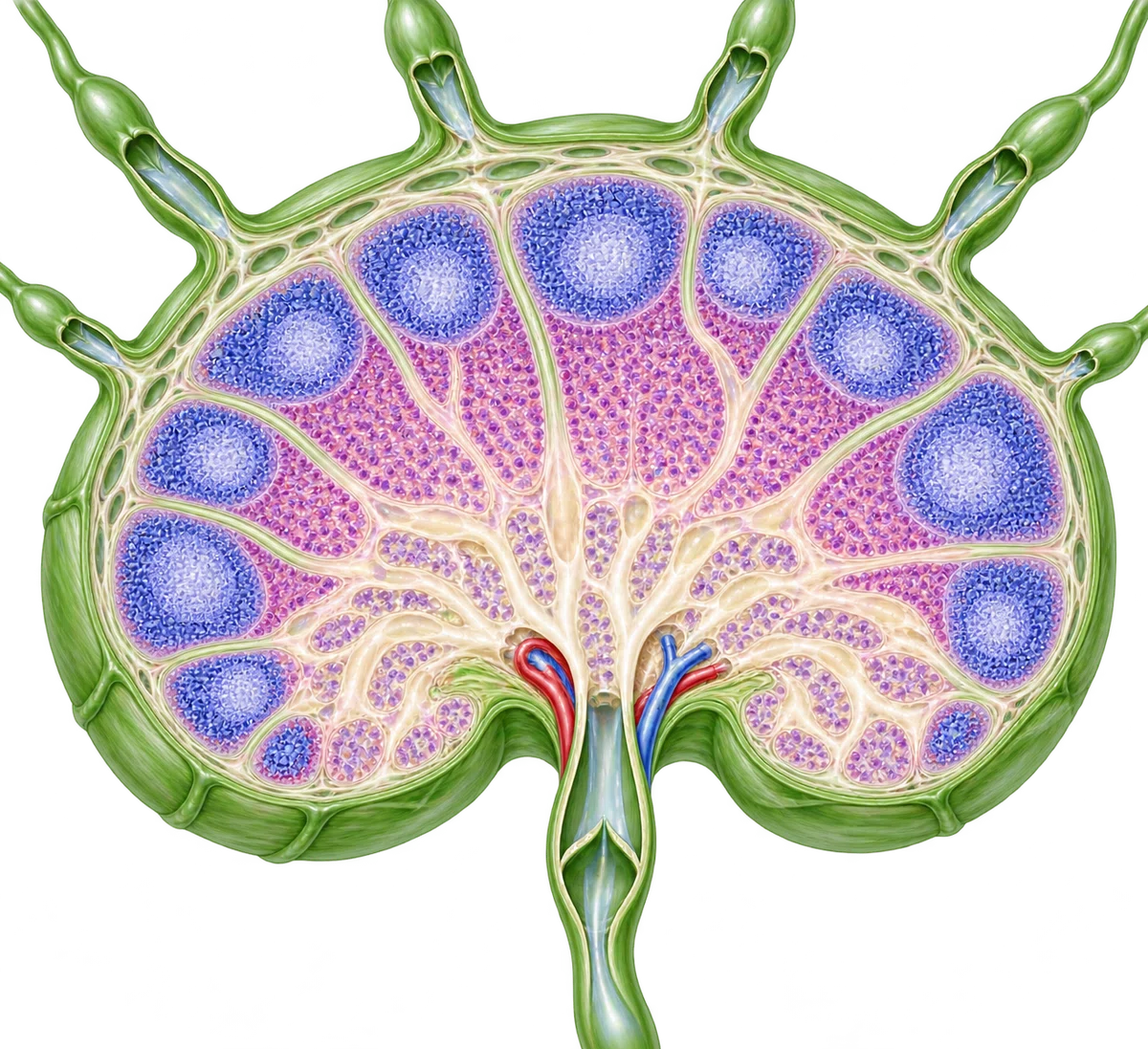
Migratory dendritic cells bring tissue-derived antigens to lymph nodes. Many naive T and B cells enter from blood through specialized venules, then encounter antigen in organized compartments.
Outer cortical regions support B-cell interactions.
The paracortex supports T-cell and dendritic-cell encounters.
Afferent vessels enter; efferent lymph exits at the hilum.
Tissue immune cells recognize local signals.
Lymph transports antigens and migrating cells toward nodes.

Antigen recognition and supporting signals activate lymphocytes.
Effector cells can return to circulation and reach affected tissues.
Activated B cells can become antibody-secreting plasma cells; selected lymphocytes become memory cells.
Cell trafficking helps direct protective responses toward affected tissues.
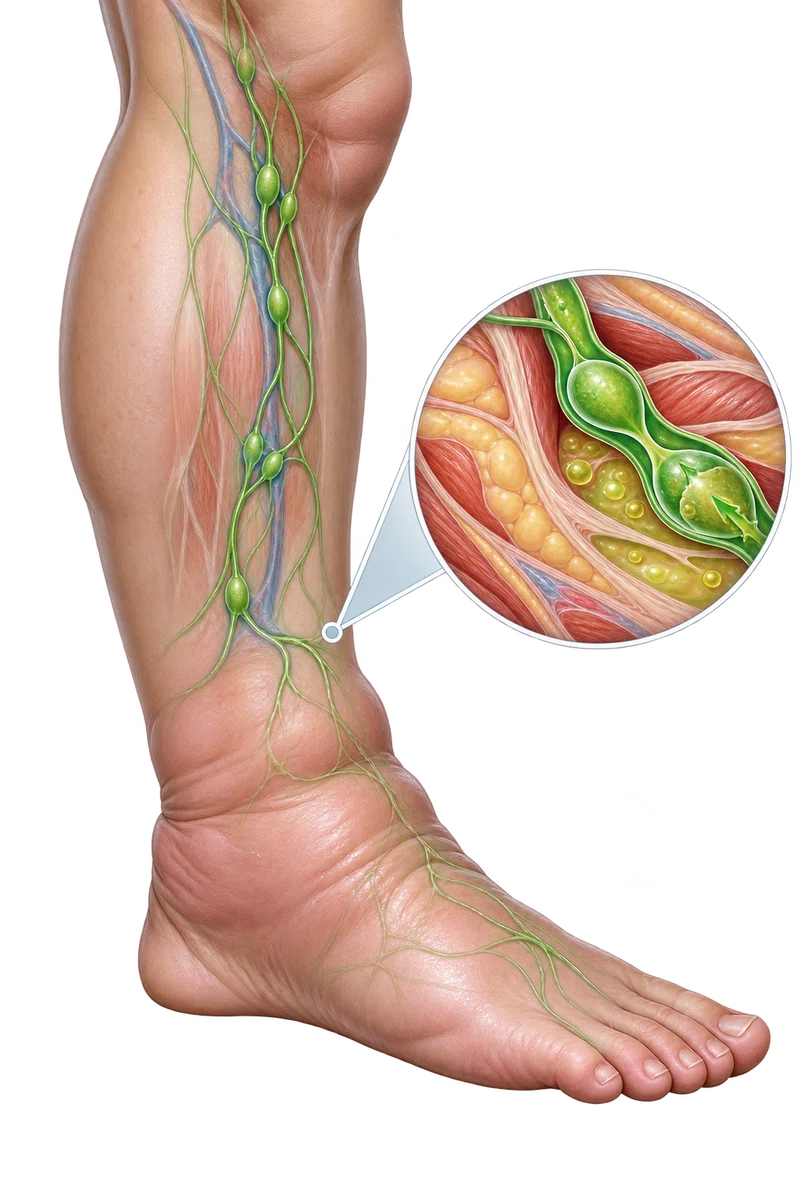
Impaired lymph drainage can cause persistent swelling and tissue changes.
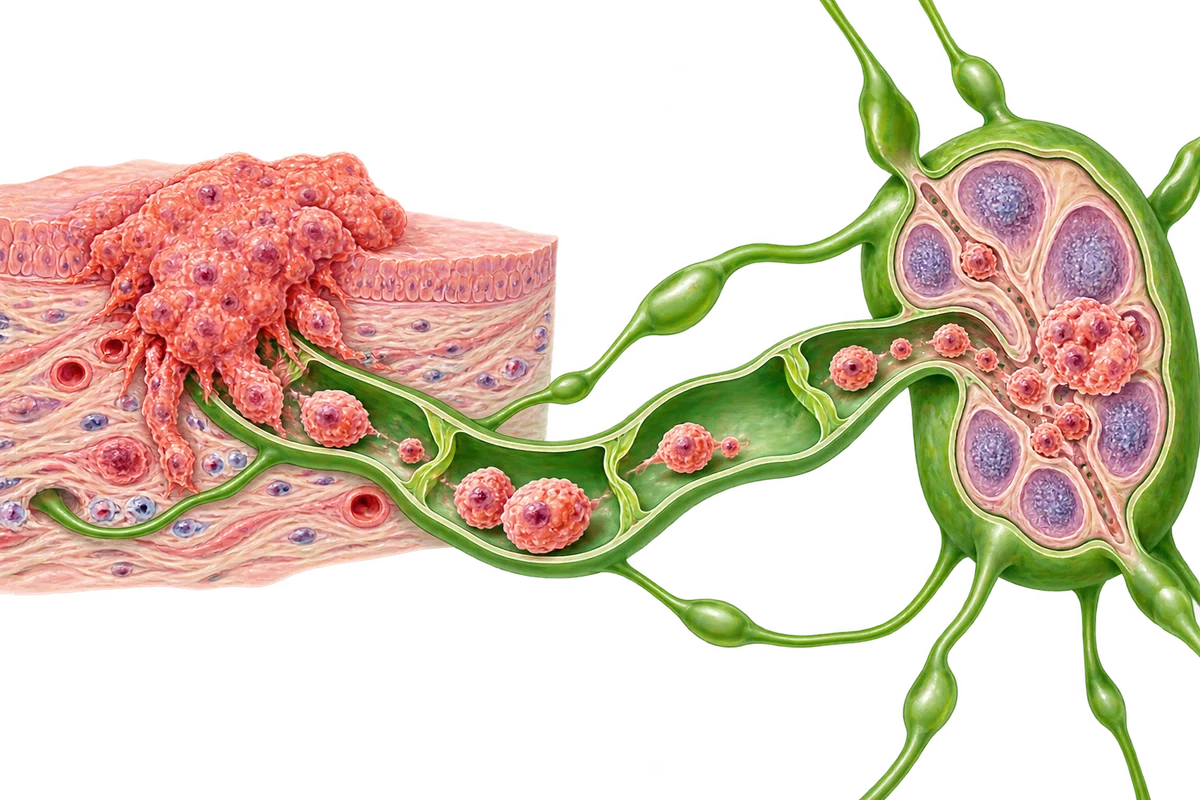
Lymphatic pathways support immune responses but can also provide routes for tumor spread.

Age-related changes can affect immune-cell trafficking and communication.
Stromal organization and cellular interactions can alter with age.
These shifts can influence responses to newly encountered antigens.
Human and animal studies provide complementary findings. Effects vary between tissues and people.
Artwork illustrates the main mechanisms schematically; molecular sizes, colors and distances are not literal.