Skip to content

Immuno
senescence

How the immune system changes with age

Immunosenescence refers to the gradual, multi-dimensional remodeling of the immune system with age. It is not a simple “shutdown”, but a complex reprogramming that can reduce protection against some infections and contribute to chronic diseases, while coexisting with persistent low-grade inflammation (inflammaging).

Explore immunosenescence →

What is immunosenescence?

Immunosenescence is the age-related alteration of both innate and adaptive immunity. It involves changes in immune cells, tissues, signaling molecules and metabolic programs, leading to a reduced ability to respond to new threats, altered immune regulation, and a tendency toward chronic low-grade inflammation.

Learn more →

Younger and older immune system

Younger adult

(typical younger profile)

Younger version of the same male anatomy character
  • Active thymus (new T cells)
  • More naïve T cells
  • Robust antibody responses
  • Effective innate responses
  • Balanced inflammation
Aging

Older adult

(changes vary by person)

  • Thymic involution (fewer new T cells)
  • Reduced naïve T cells (increased memory/experienced)
  • Altered antibody responses
  • Changes in innate-cell function
  • Higher baseline inflammation (inflammaging)

What changes with age?

Multiple components of the immune system are affected by aging.

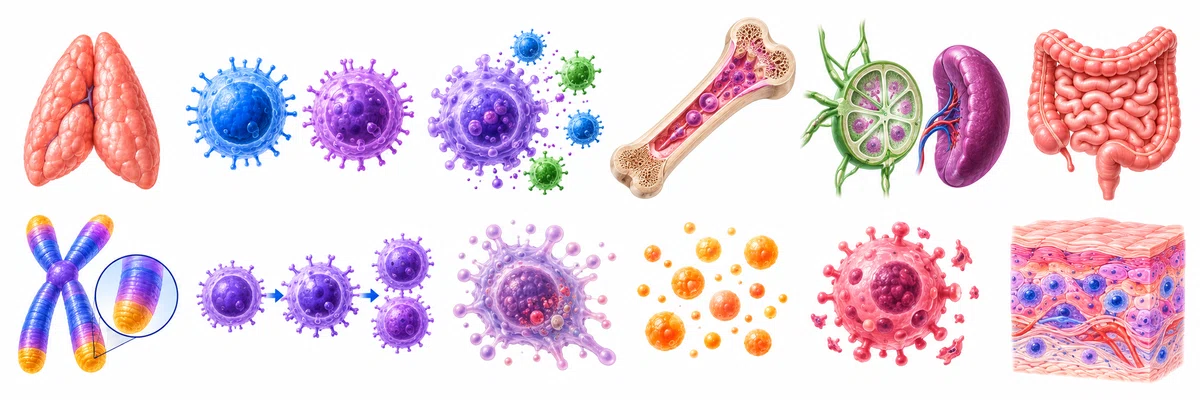
Thymus & T cells

Scientific illustration of age-related immune changes
  • Thymic involution
  • Fewer naïve T cells
  • More memory/exhausted T cells
  • Altered T-cell function

B cells & antibodies

Scientific illustration of age-related immune changes
  • Reduced B-cell diversity
  • Lower antibody responses to new antigens
  • Altered affinity and duration of protection

Innate immunity

Scientific illustration of age-related immune changes
  • Changes in macrophages, neutrophils, dendritic cells and NK cells
  • Reduced phagocytosis and antigen presentation
  • Altered cytokine production

Hematopoiesis

Scientific illustration of age-related immune changes
  • Shift toward myeloid lineage production
  • Reduced lymphoid output
  • Altered stem cell function

Cellular metabolism

Scientific illustration of age-related immune changes
  • Metabolic reprogramming (e.g., altered mitochondrial function)
  • Influences immune-cell function and longevity

Immune regulation

Scientific illustration of age-related immune changes
  • Changes in regulatory networks
  • Altered cytokine balance
  • Contribution to chronic inflammation

Immune aging is remodeling, not simply decline

Some immune functions decrease, some become dysregulated, and inflammatory signaling often increases.

Decreased

  • Naïve T cells
  • Thymic output
  • Vaccine responses (to new antigens)
  • Some innate functions

Dysregulated

  • Cytokine production
  • Immune cell signaling
  • Metabolic pathways
  • Tissue repair

Increased

  • Memory/experienced T cells
  • Chronic low-grade inflammation
  • Myeloid cell activation
  • Risk of autoimmunity and age-related diseases

Immunosenescence and inflammaging

Immunosenescence and inflammaging are interconnected. Aging-related changes in immune cells and tissues contribute to a chronic, low-grade inflammatory state, which in turn can further drive immune dysfunction.

IMMUNOSENESCENCE

Changes in immune cells,
reduced regulation,
altered responses
A self-reinforcing
cycle

INFLAMMAGING

Chronic low-grade
inflammation with
increased inflammatory
mediators
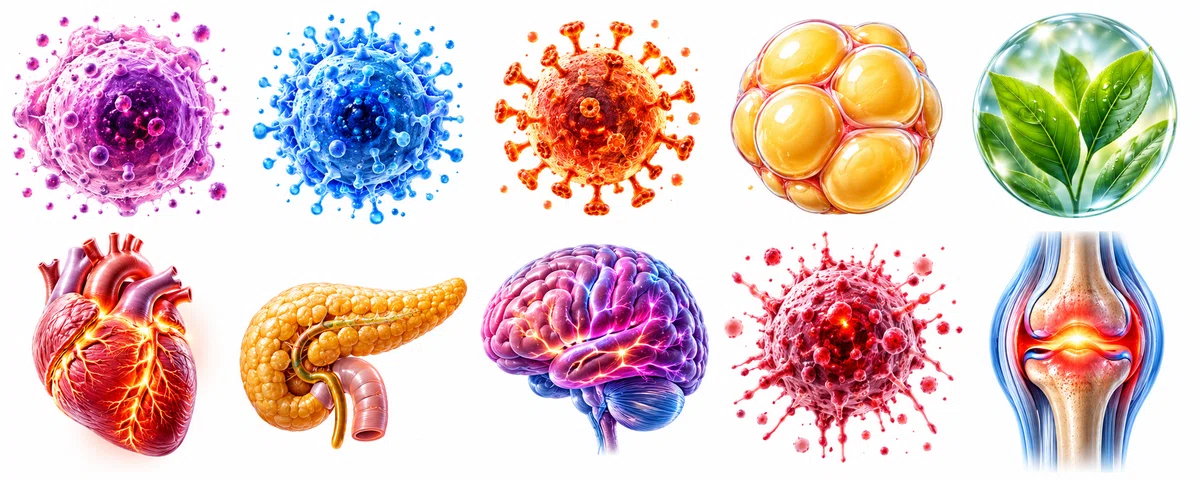
Why does it matter?

Immunosenescence can influence infection susceptibility and disease risk.

Increased vulnerability to some infections

(e.g., influenza, RSV, COVID-19)

Altered vaccine responses

(often lower and less durable)

Reduced immune surveillance

May contribute to higher cancer risk

Association with age-related diseases

(e.g., cardiovascular disease, type 2 diabetes, neurodegeneration)

Not everyone ages the same way

Immune aging is highly variable. Two people of the same chronological age can have very different immune profiles based on genetics, lifetime exposure to microbes, overall health, environment and lifestyle.

Age 70

More favorable
immune profile
  • Higher naïve T cells
  • Lower inflammation

Age 70

More advanced
immune aging
  • Higher inflammation
  • Reduced immune responsiveness

Can immune aging be measured?

Several research tools can assess aspects of immune aging, although no single test fully defines an individual’s immune age.

Immune cell phenotyping

(e.g., naïve/memory T-cell balance)

Inflammatory mediators

(e.g., IL-6, TNF-α, CRP)

Functional assays

(e.g., cytokine production, phagocytosis, vaccine responses)

Multi-omic approaches

(genomics, transcriptomics, epigenetics, metabolomics)

Supporting healthy immune aging

While immunosenescence cannot be stopped, evidence suggests that lifestyle choices may help support a healthier immune system with age.

Nutritious diet

Fruits, vegetables, whole grains, healthy fats

Regular physical activity

Supports immune function and reduces inflammation

Adequate sleep

Helps immune regulation

Avoid tobacco

Reduces inflammation and disease risk

Manage chronic conditions

(e.g., cardiovascular disease, diabetes)

Key takeaways

  • Immunosenescence is real and involves complex changes.
  • It affects both innate and adaptive immunity.
  • It varies between individuals.
  • It can influence the risk of infections, vaccine responses and age-related diseases.
  • Healthy lifestyle choices may support a more resilient immune system with age.

Selected sources and references

Artwork illustrates the main mechanisms schematically; molecular sizes, colors and distances are not literal.