1. Sense microbes
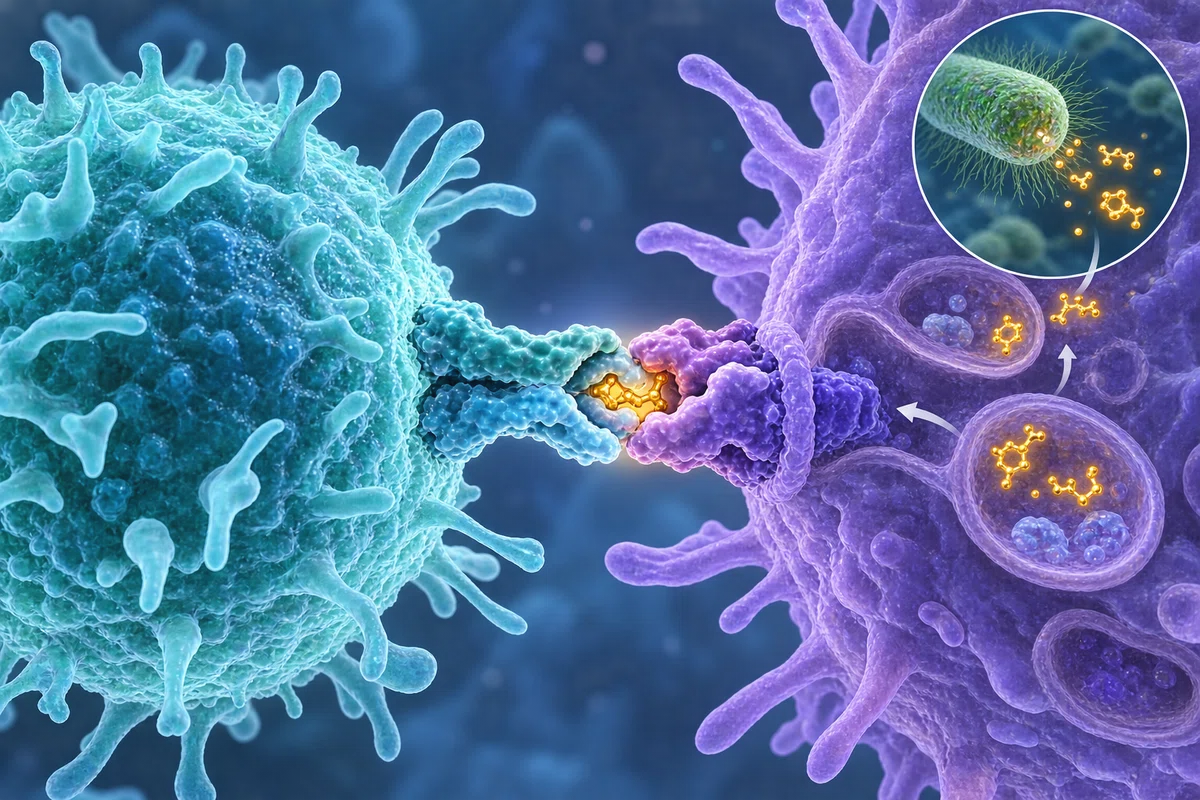
Recognize metabolites from many bacteria and fungi with riboflavin synthesis pathways.
 Subscribe
MAIT cells are innate-like T lymphocytes that recognize microbial metabolites presented by MR1. They respond rapidly to infection and help coordinate tissue immunity.
Back to all immune cells →MAIT cells express a semi-invariant αβ T-cell receptor. Unlike conventional T cells that usually recognize peptides, they detect small microbial metabolites displayed by MR1, an MHC-related molecule.
Many activating antigens arise from microbial riboflavin (vitamin B2) synthesis. MR1 differs from classical MHC and from CD1d, the lipid-presenting molecule recognized by NKT cells.
Innate-like T lymphocyte
MR1-presented microbial metabolites
Blood, liver, gut and lungs
TCR signals or inflammatory cytokines
MAIT-cell responses vary with antigen exposure, cytokines and tissue context.
Recognize metabolites from many bacteria and fungi with riboflavin synthesis pathways.
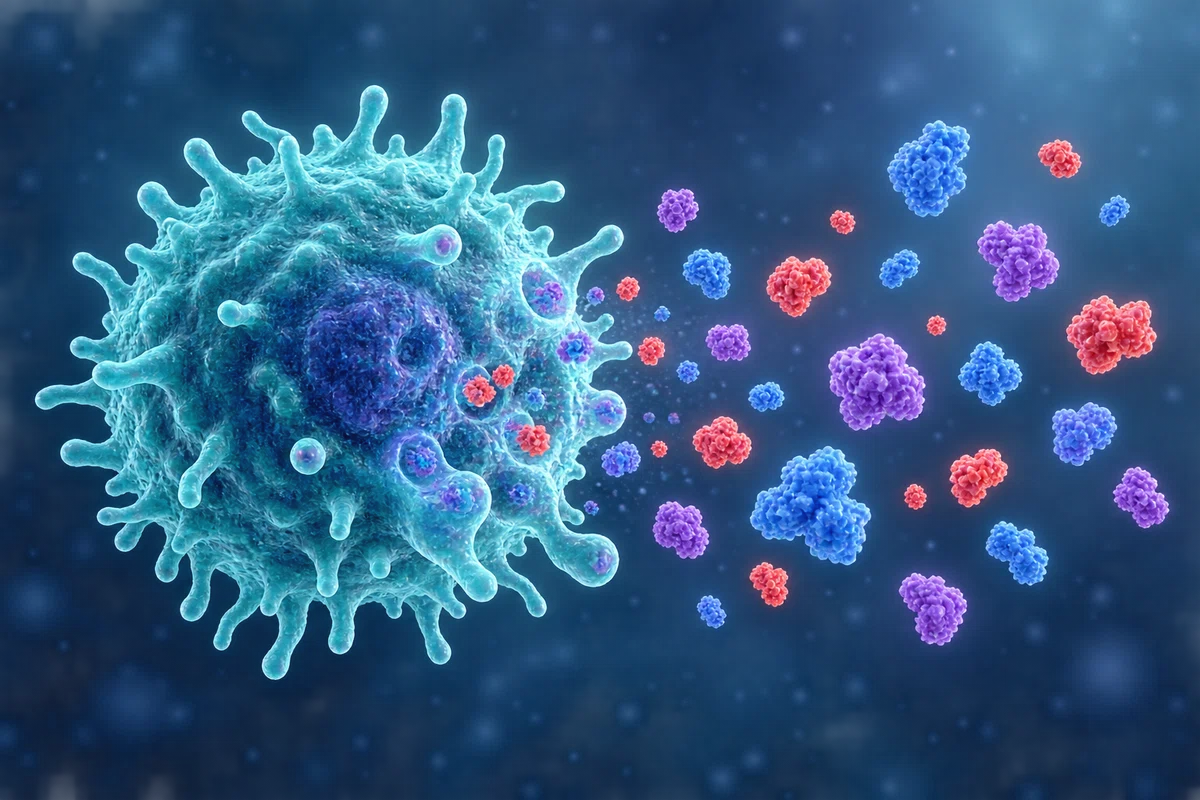
Produce IFN-γ, TNF and, in some settings, IL-17.
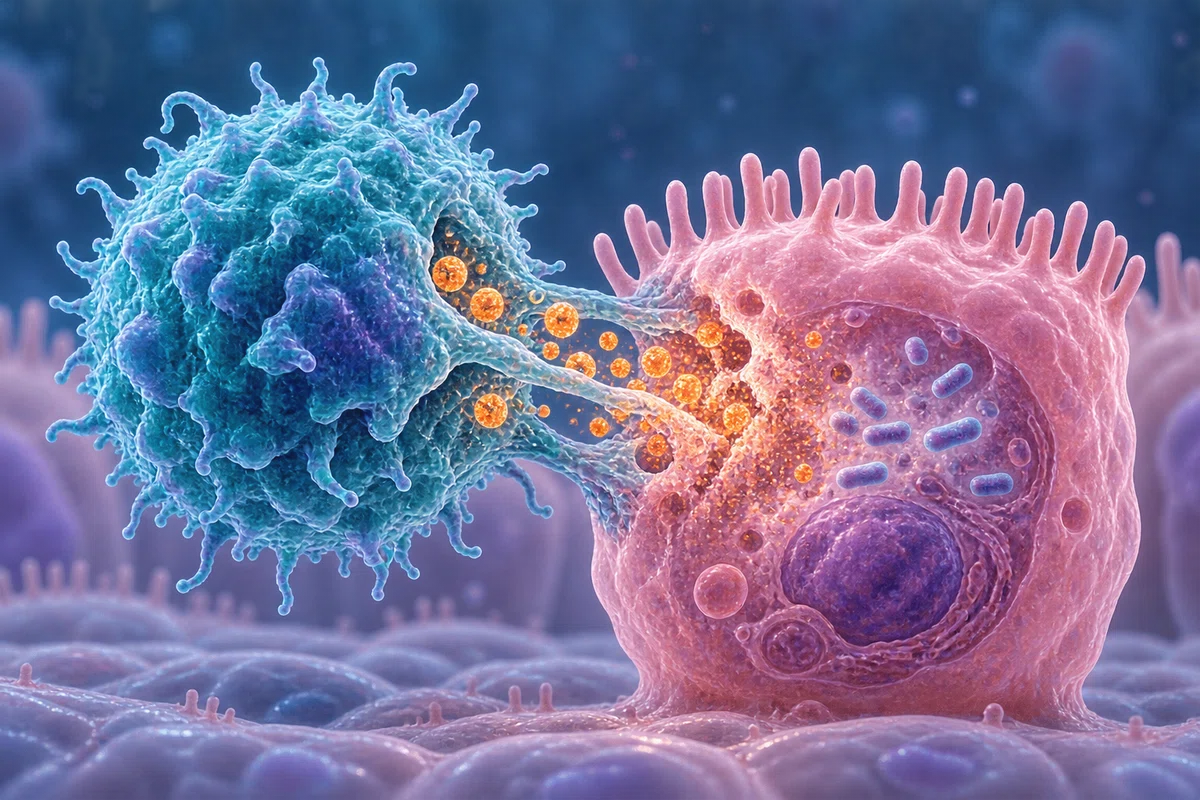
Activated MAIT cells can use cytotoxic molecules to eliminate bacterially exposed cells.
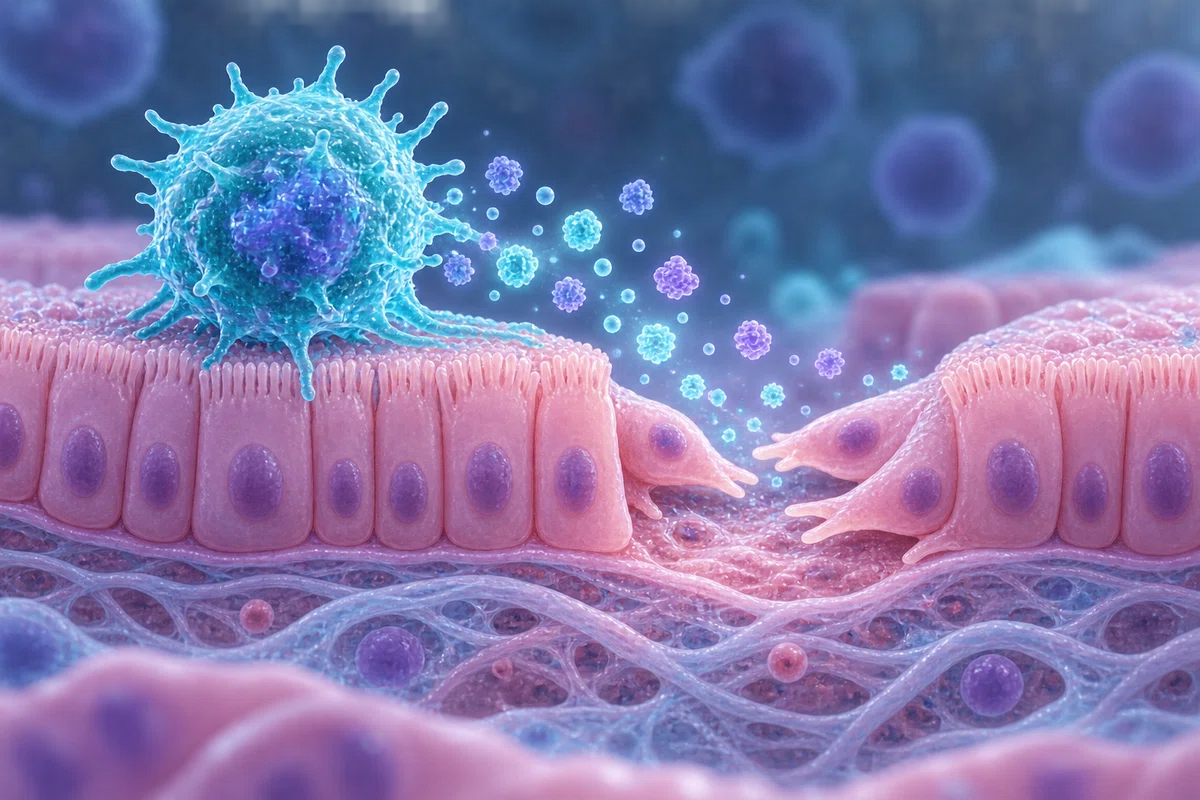
Human laboratory studies identify repair-associated programs after TCR activation.
From microbial metabolites to a coordinated cellular response.

Bacteria and fungi produce riboflavin-pathway metabolites.

An antigen-presenting cell displays a metabolite bound to MR1.
The MAIT TCR contacts the MR1–metabolite complex.
Activated cells release cytokines and can deploy cytotoxic molecules.

IL-12 and IL-18 can activate MAIT cells without TCR engagement. This helps explain responses during viral infections: viruses do not synthesize riboflavin.

Recognition of microbial vitamin B2 metabolites does not mean vitamin B2 supplements boost MAIT cells.
Artwork illustrates the main mechanisms schematically; molecular sizes, colors and distances are not literal.