1. Sense lipid antigens
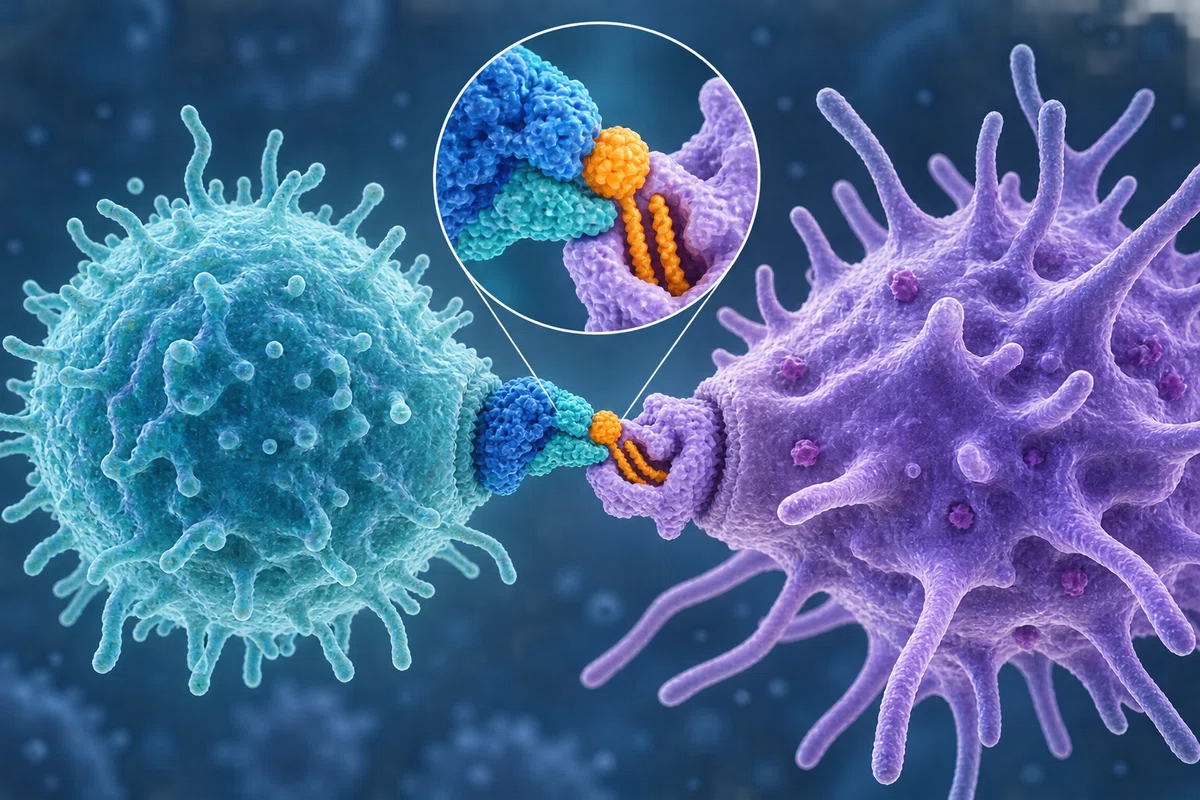
Recognize self or microbial lipids displayed by CD1d—not free-floating lipid alone.
 Subscribe
NKT cells are specialized T lymphocytes that recognize lipid antigens presented by CD1d. They respond rapidly and help connect innate and adaptive immunity.
Back to all immune cells →NKT cells have an αβ T-cell receptor and innate-like response properties. Unlike conventional T cells that usually recognize peptides on classical MHC, CD1d-restricted NKT cells recognize lipid antigens.
Type I, or invariant NKT (iNKT), cells have a semi-invariant TCR. Type II NKT cells use more diverse receptors. Activation can integrate antigen recognition and inflammatory cytokines.
CD3⁺CD56⁺ “NKT-like” cells are not automatically CD1d-restricted NKT cells.
Distinct NKT subsets help coordinate rapid responses; their effects depend on the tissue and inflammatory setting.
Recognize self or microbial lipids displayed by CD1d—not free-floating lipid alone.
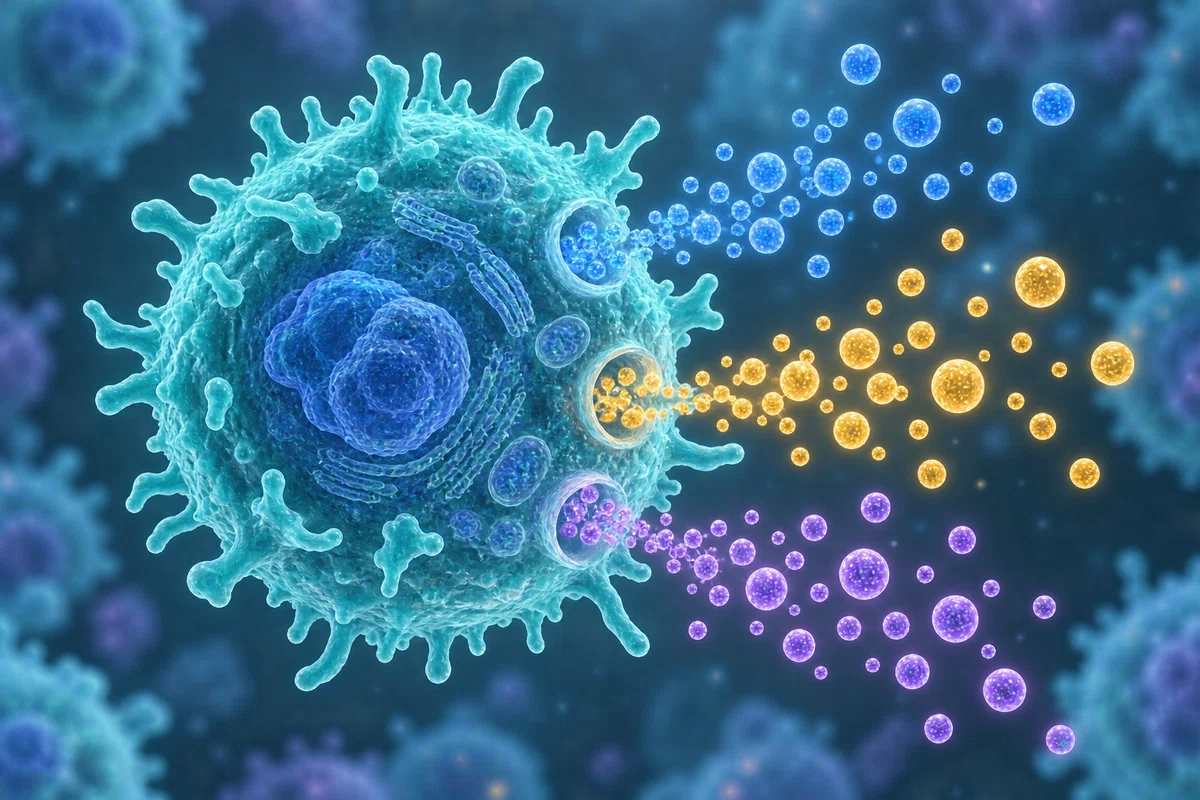
Signals such as IFN-γ or IL-4 help shape the activity of other immune cells.
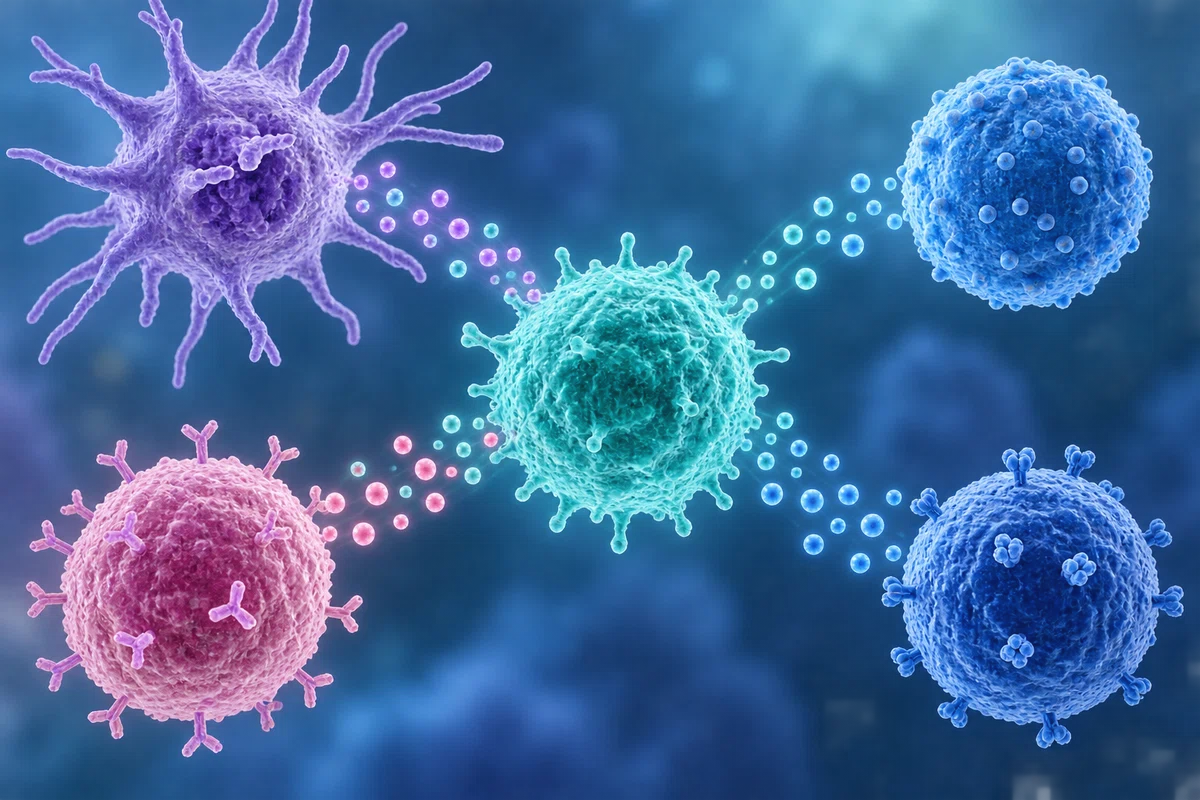
Interact with dendritic cells, NK cells, B cells and other T cells.
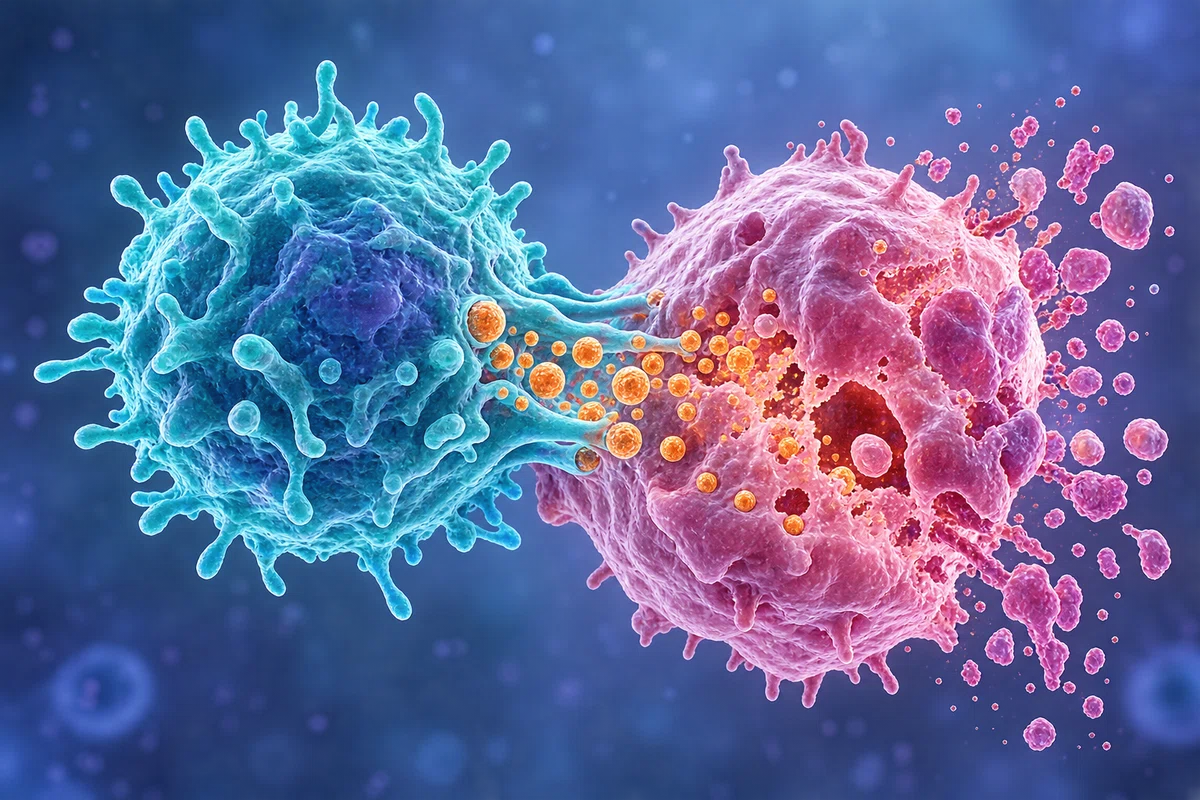
Some NKT cells can kill target cells through perforin and granzymes.
Antigen recognition and inflammatory signals can contribute to activation.
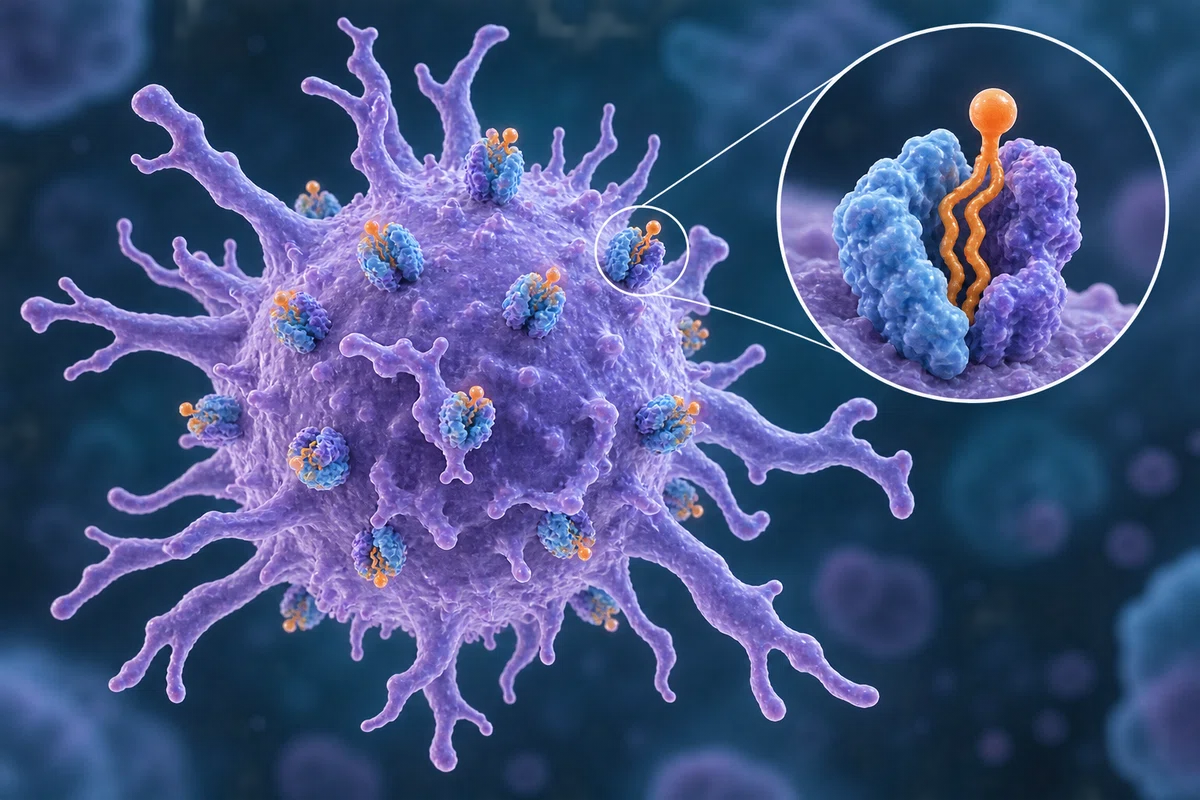
An antigen-presenting cell loads a lipid antigen onto CD1d.
The NKT TCR contacts the CD1d–lipid complex.
Activated cells rapidly produce cytokines and other effector signals.
Signals influence other immune cells and the local response.
NKT cells occur in blood and tissues, including the liver. Their frequencies and distribution differ markedly between people and species; mouse findings do not translate directly to humans.
Much mechanistic evidence comes from animal studies.

Artwork illustrates the main mechanisms schematically; molecular sizes, colors and distances are not literal.