
Vaccination
& Aging
Training an Aging Immune System
Our immune system changes with age.
Vaccination becomes more — not less — important.
Aging alters the cells, tissues and signals that drive immune responses. These changes can reduce vaccine responses in some individuals, but vaccination remains a key strategy to prevent infection and serious disease in older adults.
Why Vaccination Changes With Age
The vaccine is the same challenge. The immune system receiving it has changed.

Fewer naïve T cells
The thymus shrinks with age, reducing naïve T cells and the diversity of the T-cell repertoire.
Altered T-cell function
T cells show changes in activation, proliferation and memory function.
Changes in B-cell immunity
B-cell populations and function change with age, affecting antibody quality and durability.
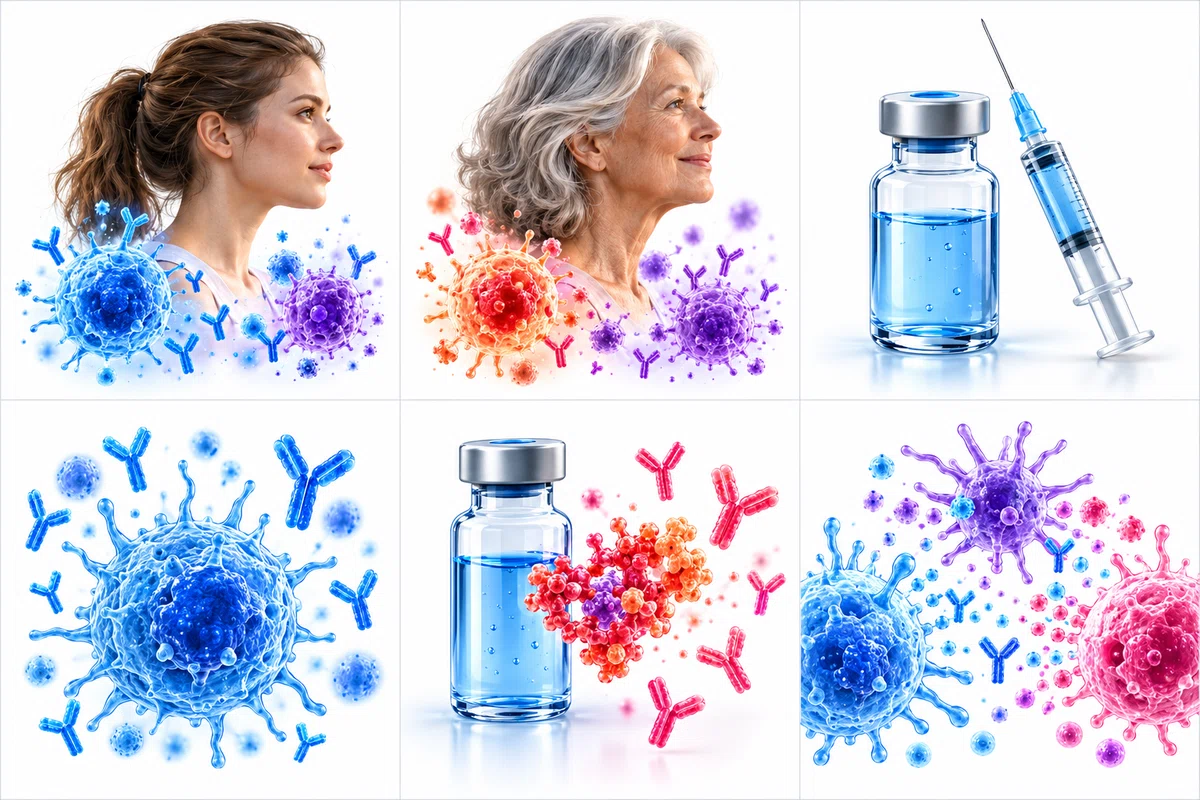
YOUNGER
IMMUNE SYSTEM
Diverse, responsive.
More naïve cells.
IMMUNE AGING
Fewer naïve cells,
altered function,
more inflammation.
VACCINE RESPONSE
Often reduced, but still protective.
Stronger protection against severe disease.
Altered antigen presentation
Aging affects dendritic cells and other antigen-presenting cells, changing the signals that activate immune responses.
Inflammaging
Persistent low-grade inflammation can change immune coordination and is associated with reduced vaccine responsiveness.
Remodeled immune memory
Previous infections and vaccinations shape the immune repertoire across life.
Immunosenescence + Inflammaging
Two interconnected features of immune aging shape vaccination.
Immunosenescence
Age-associated changes in immune-cell composition and function, including reduced diversity, altered naïve and memory-cell balance, and impaired immune regulation.
Inflammaging
Persistent low-grade inflammatory activity can alter immune activation, impair coordinated responses and change the inflammatory environment.
Result: A different response to vaccination
- Weaker responses in some individuals
- Slower or altered immune activation
- Potentially lower antibody responses
- Altered cellular immunity
- Potentially shorter duration of protection
What Happens After Vaccination?
The pathway remains intact — but aging can influence every step.

1. Antigen recognition
Vaccine antigens enter the body and activate innate immune cells and antigen-presenting cells.
2. Antigen presentation
Dendritic cells process antigens and activate T cells, bridging innate and adaptive immunity.
3. T-cell activation
Antigen-specific CD4+ and CD8+ T-cell responses develop.
4. B-cell activation
Activated B cells proliferate and undergo differentiation into antibody-producing plasma cells.
5. Antibodies and memory
Protective antibodies and long-lived memory B and T cells provide protection against future exposure.
A Weaker Response Does Not Mean No Protection
Older adults may generate lower antibody levels or less robust cellular responses than younger adults. Nevertheless, vaccination can still provide meaningful protection, particularly against severe disease, and remains a central preventive strategy for older adults.
Vaccines remain highly effective at reducing the risk of severe disease, hospitalization and death.
Vaccines Designed With Aging in Mind
The pathogen remains the same. Smarter vaccine design.
Higher Antigen Dose
Increased antigen content can enhance the immune response, addressing immune-system changes in older adults.
Adjuvants
Help activate innate immune responses by stimulating specific pathways and improving the immune response.
Recombinant & Newer Platforms
Recombinant technologies and optimized formulations can improve immune responses without simply increasing the dose.
Influenza: A Model for Vaccination in Older Adults
Older adults have a high burden of severe influenza, and immune aging can reduce responses to standard vaccines. Enhanced vaccines have been developed to improve protection.
Standard approaches
Enhanced approaches (preferred for adults ≥65)
Vaccines That Matter as We Age
Vaccination helps protect against important severe infections. Recommendations may change, so always check current guidance.
Influenza
High burden of severe disease in older adults; enhanced vaccines can improve immune responses
COVID-19
Older age is a major risk factor for severe disease; staying up to date with recommended vaccination remains important
RSV
Recommended vaccination can reduce severe lower respiratory tract disease
Pneumococcal disease
Recommended for adults 50+; some earlier depending on conditions; helps prevent serious pneumococcal disease
Shingles (herpes zoster)
Recommended beginning at age 50; helps prevent shingles and postherpetic neuralgia
Chronological Age Is Not Immune Age
Two people can be the same age but have different immune profiles.
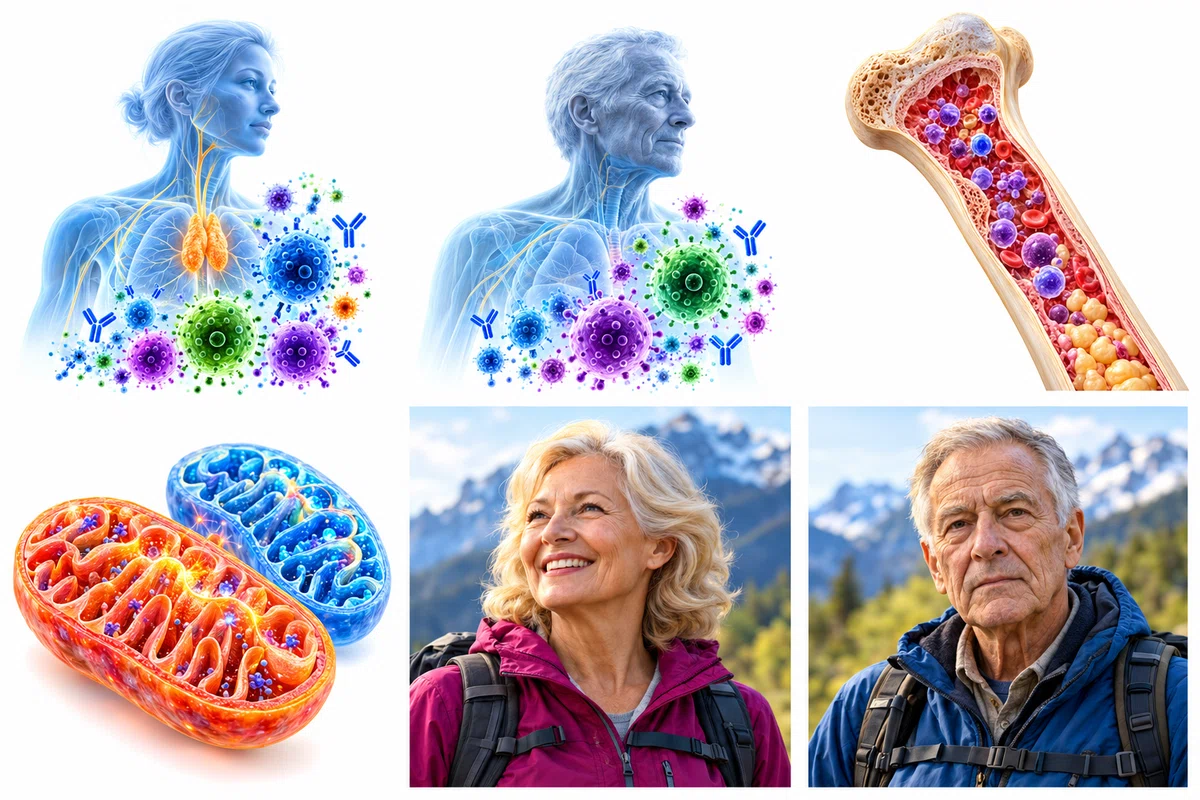
Age 70
Different immune history.
Different inflammatory profile.
Potentially different vaccine response.
Age 70
Different immune-cell repertoire.
Different immune regulation.
Different vaccine response.
Immune aging is heterogeneous
Genetics, chronic infections, medications, health and lifestyle can influence immune function. Chronological age is useful, but does not capture every individual’s immune profile.
Can We Improve Vaccine Responses During Aging?
A rapidly developing area of immunology.
Established strategies (in current use)
Research and emerging approaches
The Goal Is Not Just More Antibodies
Vaccines induce immunity in multiple dimensions.

Antibody quantity
Antibody quality
Neutralization breadth
Memory B cells
CD4+ T-cell responses
CD8+ T-cell responses
Duration of immune memory
Protection against severe disease
Healthy Aging Includes Vaccination
Vaccination is a part of healthy aging — protecting against severe infections while supporting a more resilient immune system. Combine vaccination with healthy lifestyle choices and management of chronic conditions.
Take care of your ImmAge. →Prevent severe infections
Reduce complications
Preserve independence
Support healthy aging
Selected sources and references
- Immunosenescence and human vaccine immune responses, 2019
- Vaccines to prevent infectious diseases in the older population, 2020
- CDC — Flu and people 65 years and older
- CDC — Explaining how vaccines work
Artwork illustrates the main mechanisms schematically; molecular sizes, colors and distances are not literal.