1Pathogen entry
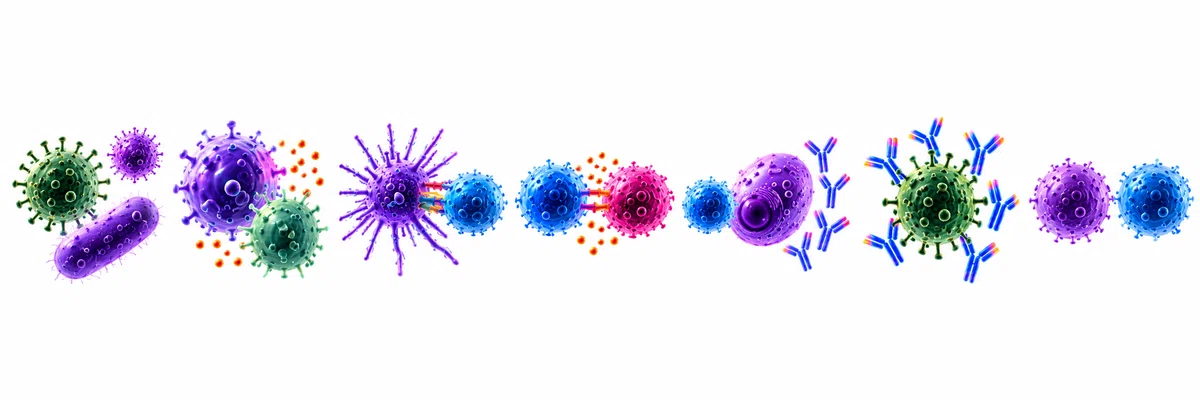
Pathogens (viruses, bacteria, fungi, parasites) enter the body and are recognized by innate immune cells.
 Subscribe
Innate and adaptive immunity are two interconnected arms of a single, integrated defense system. They communicate constantly, each activating and guiding the other, to eliminate pathogens and build long-term protection.
Explore the big pictureInnate and adaptive immunity are not separate systems but two arms of a single, coordinated network.
Innate immunity detects danger and initiates the response. It also activates adaptive immunity by presenting antigens and providing key signals. Adaptive immunity then generates highly specific responses, with B cells producing antibodies and T cells eliminating infected cells.
Together, they provide fast, effective and long-lasting protection.
Learn more“Two arms. One immune system.
— ImmuneForward
Stronger together.”
A step-by-step view of how innate and adaptive immunity work together.
Pathogens (viruses, bacteria, fungi, parasites) enter the body and are recognized by innate immune cells.
Innate immune cells (macrophages, dendritic cells, neutrophils) detect pathogens through pattern recognition receptors (PRRs) and release cytokines and chemokines, initiating inflammation.
Dendritic cells process pathogen fragments (antigens) and present them to T cells in lymph nodes, providing activation signals that link innate and adaptive immunity.
Activated helper T cells release cytokines that activate B cells (and cytotoxic T cells, which recognize and coordinate the immune response).
Activated B cells differentiate into plasma cells that produce large amounts of specific antibodies against the pathogen.
Antibodies neutralize pathogens, opsonize them for phagocytosis, and work together with innate immune cells and cytotoxic T cells to eliminate the infection.
A pool of long-lived memory B and T cells remains, providing faster and stronger protection upon re-exposure to the same pathogen.
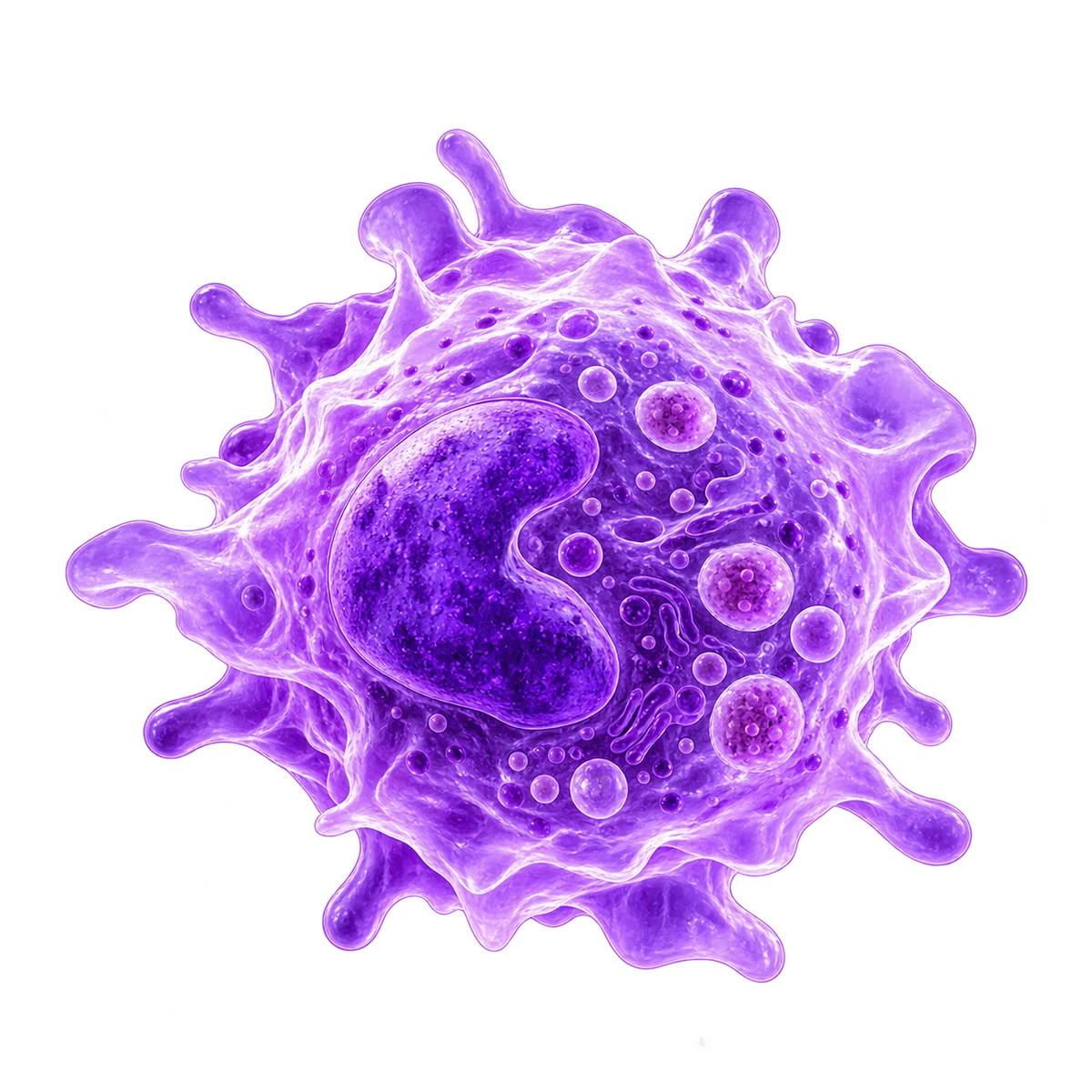
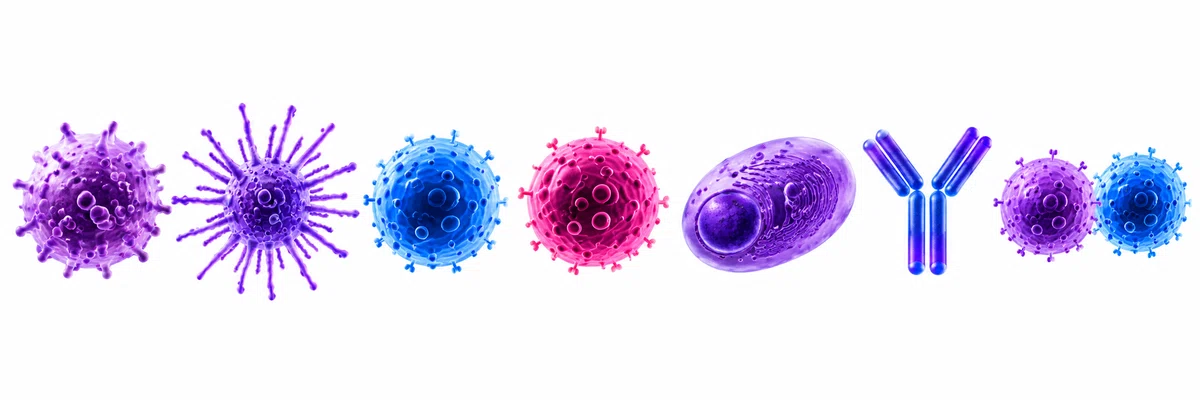
The main cells involved in the steps above.
Innate and adaptive immunity work together against many types of pathogens.
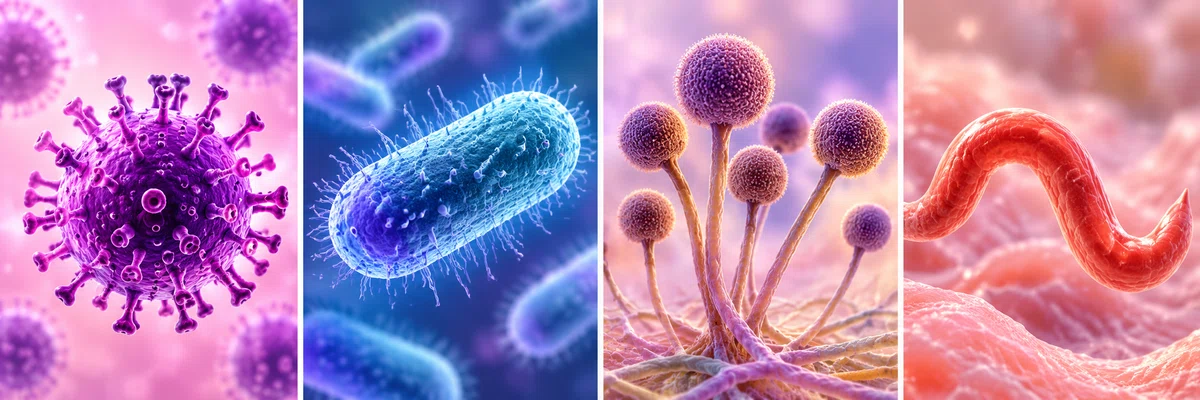
Innate cells detect the virus and produce interferons, activating T cells and B cells to clear the infection.
Innate cells trigger inflammation and phagocytosis, while antibodies and T cells help eliminate the bacteria.
Innate cells recruit and activate other immune cells, while T cells and antibodies contribute to clearance.
Innate type 2 immunity, together with T cells and antibodies, helps eliminate parasites such as helminths.
A well-coordinated immune system helps you:
Fight infections
more effectively
Benefit from
vaccines
Reduce the risk
of chronic disease
Maintain better
health as you age
Understanding how your immune system works empowers you
to make informed choices for a healthier tomorrow.
Artwork illustrates the main mechanisms schematically; molecular sizes, colors and distances are not literal.