Barrier protection

Layered physical and chemical defenses limit the entry of microbes and harmful substances.
 Subscribe
Skin combines a physical barrier with immune surveillance, microbial partnerships and local immune memory. Its epithelial and immune cells help detect danger, coordinate protection and support repair.
Explore skin & immunity →Keratinocytes produce barrier structures, alarm signals and antimicrobial molecules. Immune cells monitor tissues and coordinate responses when microbes or injury breach the barrier.
Layered physical and chemical defenses limit the entry of microbes and harmful substances.

Skin cells detect microbial and tissue-damage signals, then initiate protective responses.

Multiple immune-cell populations communicate to organize local defense.
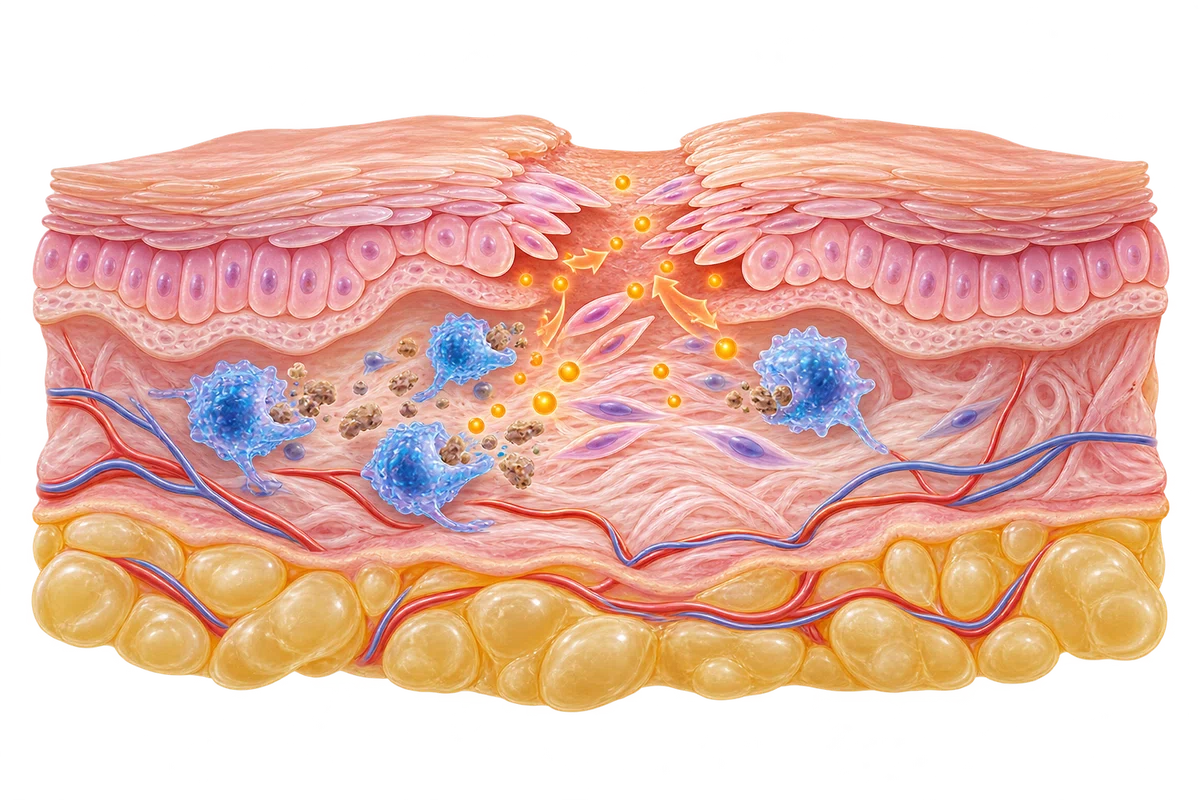
Debris clearance, repair signals and regulated inflammation help restore tissue integrity.
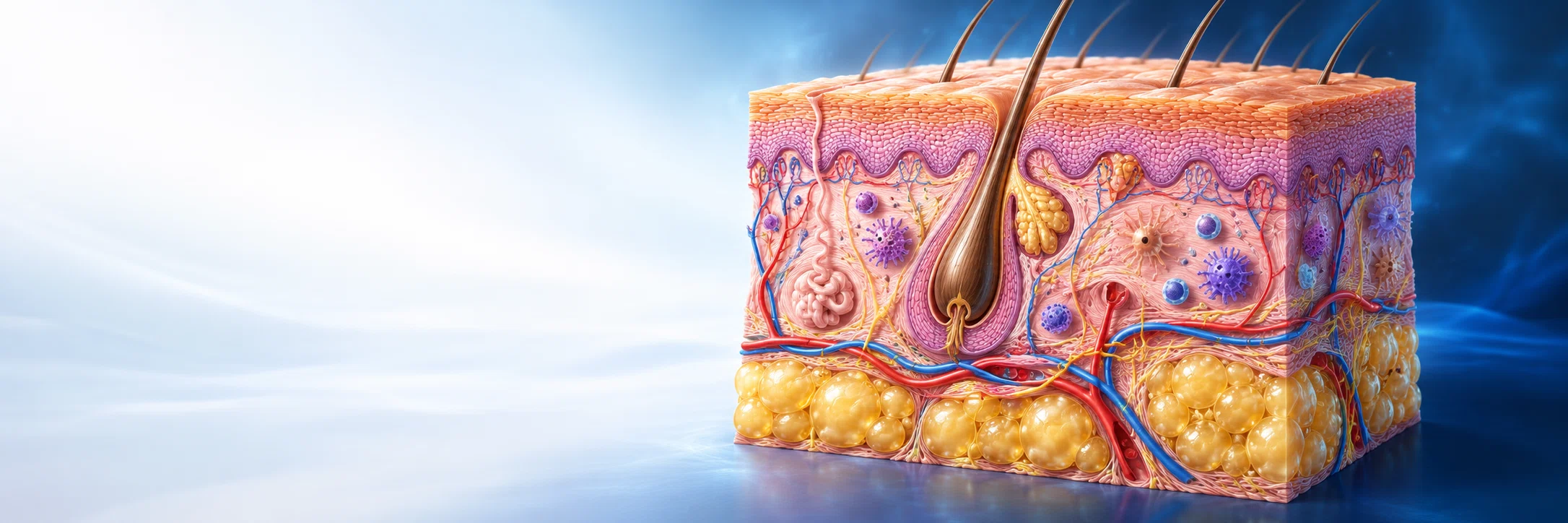
Barrier-forming epithelial cells that also release antimicrobial and immune signals.
Sample antigens and help connect local surveillance with T-cell responses.
Support surveillance, inflammation, clearance and tissue responses.
Remain locally to provide rapid responses after prior encounters.
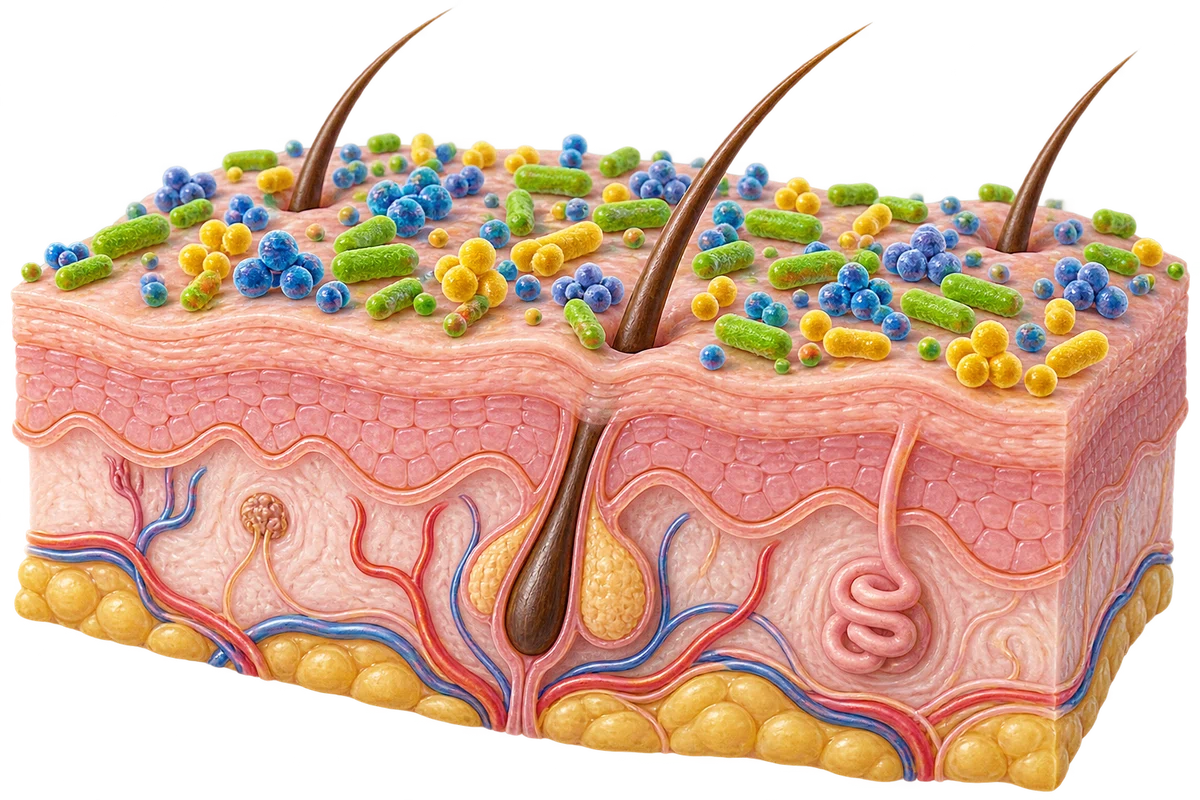
Resident microbes interact with epithelial and immune cells. These relationships can support barrier function and defense. Their effects depend on the organism, tissue conditions and host response; disturbed communities can accompany inflammation.
Microbes may cause disease when barriers or protective responses are compromised.
Barrier dysfunction and dysregulated responses can contribute to conditions such as eczema and psoriasis.
Resident T cells support protection but can also contribute to recurrent local inflammation.

Aging can influence barrier function and local immune surveillance.
A human skin study linked reduced macrophage TNF signaling with weaker recruitment of memory CD4+ T cells.
Effects vary by cell type, tissue state and stimulus. Aging does not simply switch immunity off.
Protection and appropriate resolution of inflammation both support skin health.
Artwork illustrates the main mechanisms schematically; molecular sizes, colors and distances are not literal.