1. Bind IgE
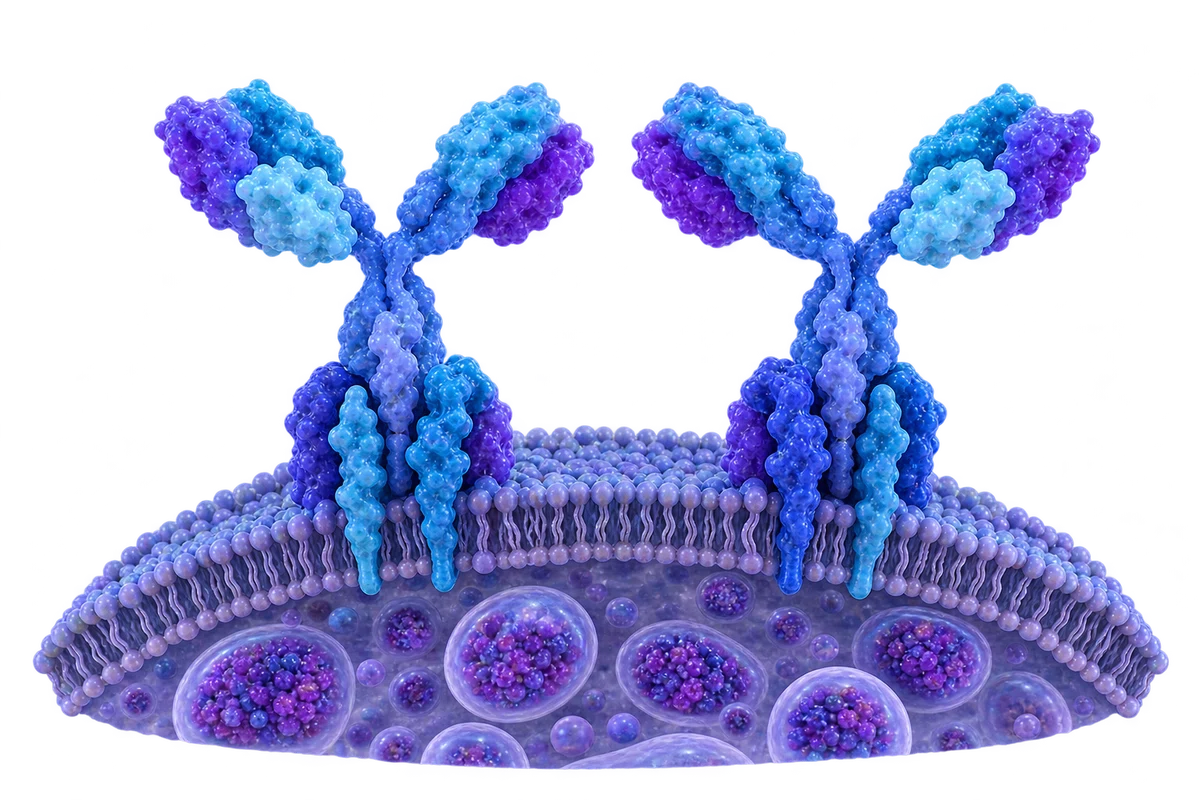
IgE antibodies bind FcεRI receptors on the mast-cell surface during sensitization.
 Subscribe
IMMUNE CELLS
Mast cells are granule-rich immune cells positioned in tissues near blood vessels, nerves and epithelial barriers. They release mediators that influence vascular responses, recruit other cells and contribute to host defense. These same mechanisms can also drive allergic inflammation.
Back to all innate immune cells →Mast cells are tissue-resident cells of the myeloid lineage. Their cytoplasm contains secretory granules rich in histamine and proteases. Local factors, including stem-cell factor acting through KIT, support their maturation and survival.
Many mast cells carry IgE bound to high-affinity FcεRI receptors. Allergen-mediated cross-linking can trigger activation, but mast cells also respond through other receptors. Their functions vary with tissue location and the signals they receive.
IgE-dependent activation is one important pathway; other signals can also activate mast cells.
IgE antibodies bind FcεRI receptors on the mast-cell surface during sensitization.

A matching allergen can bridge receptor-bound IgE and initiate intracellular signaling.

Granules release stored mediators; cells also produce lipid mediators and cytokines.
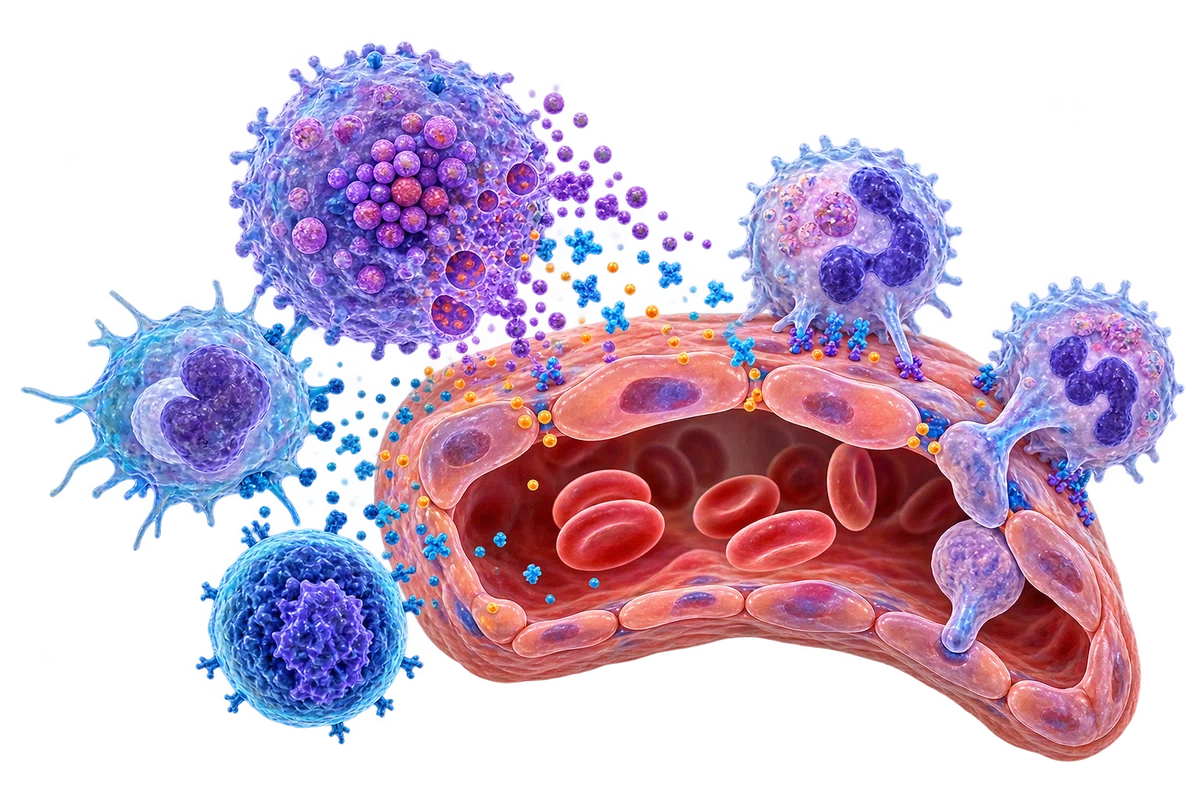
Signals affect nearby vessels and tissues and help recruit additional immune cells.
Specialized cellular functions contribute to coordinated immunity.
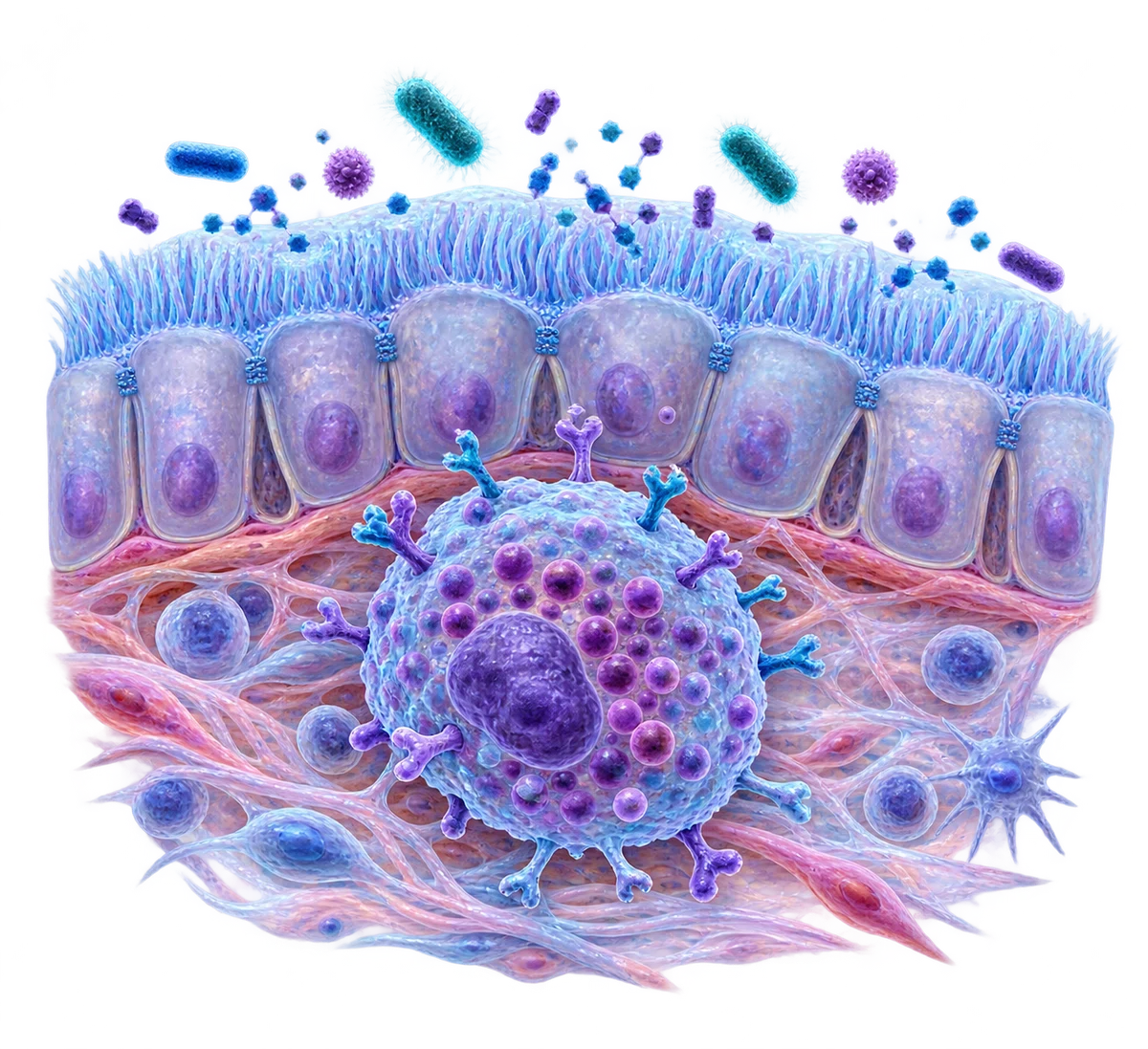
Receptors detect selected microbial, immune and tissue-derived signals.
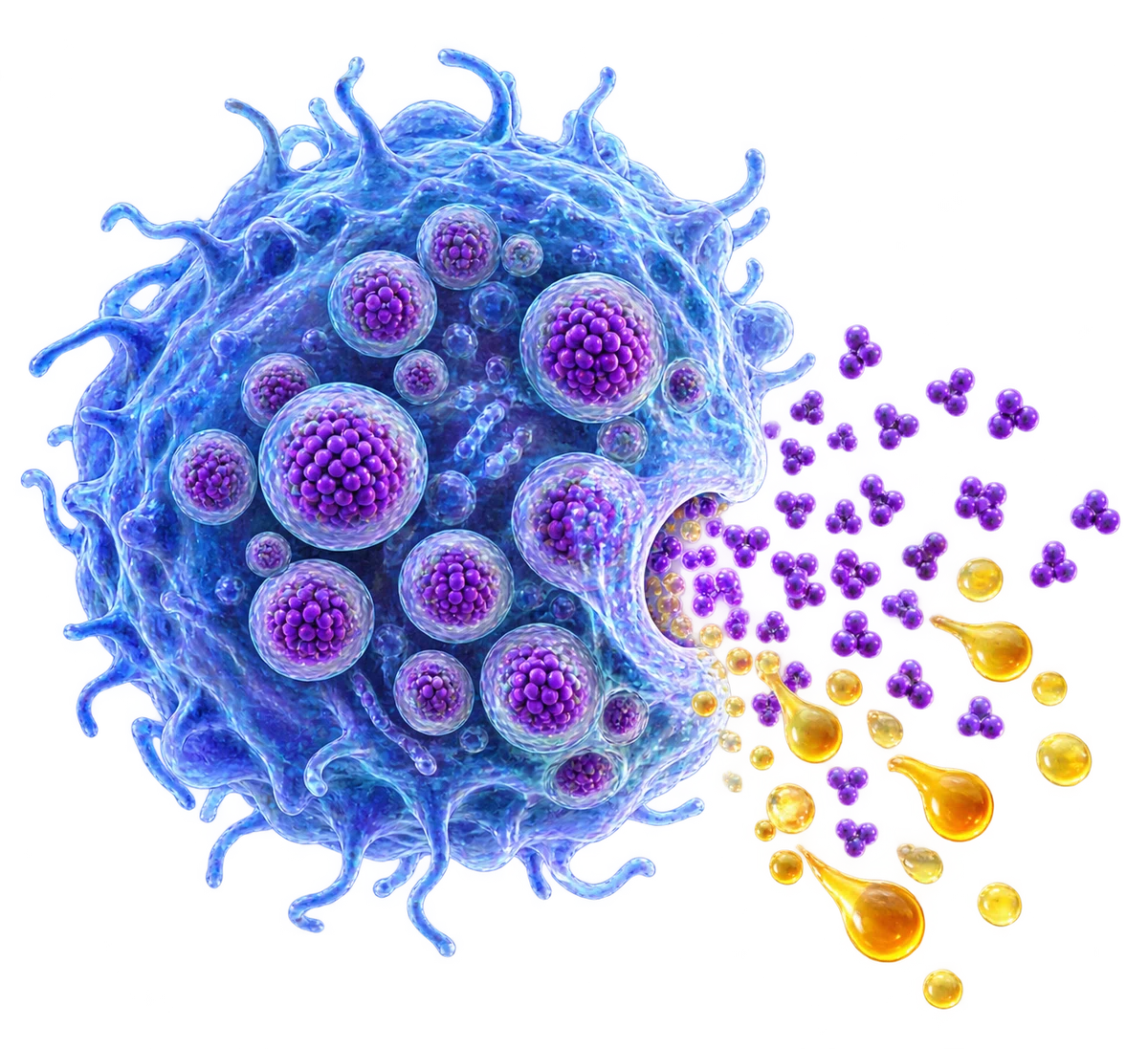
Histamine, proteases, lipid mediators and cytokines influence local responses.

Chemokines and vascular effects help bring additional leukocytes to tissues.
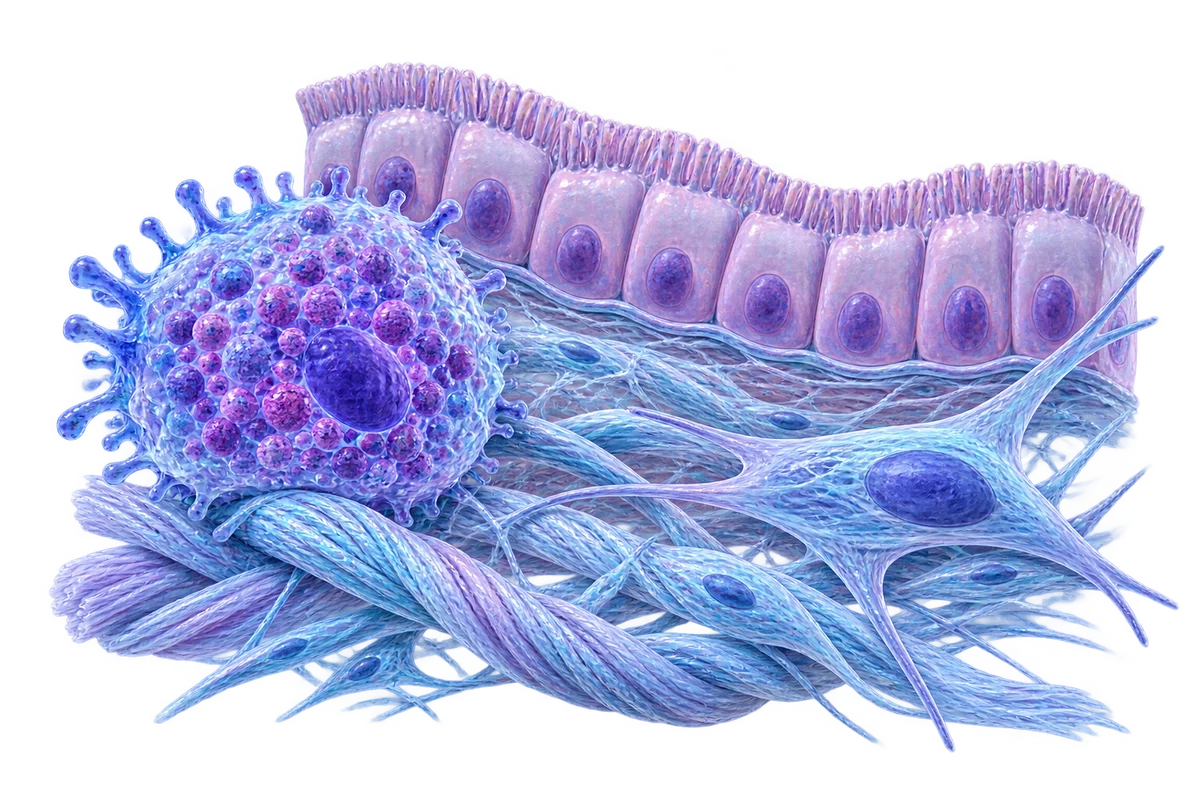
Interactions with stromal and epithelial cells contribute to remodeling and regulation.

Aging changes tissue environments; its effects on mast cells are context-dependent.
Artwork illustrates the main mechanisms schematically; molecular sizes, colors and distances are not literal.