1. Survey cells
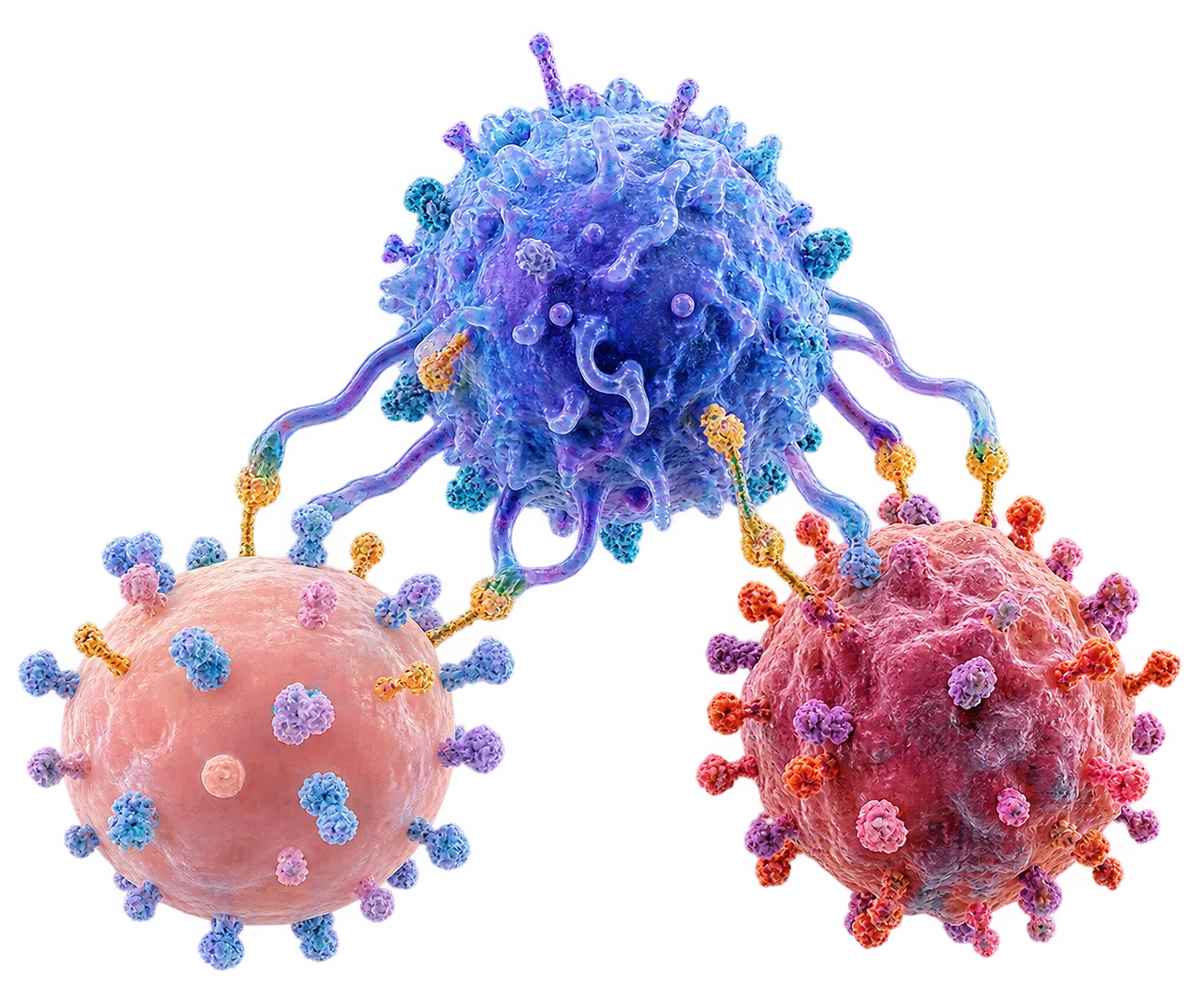
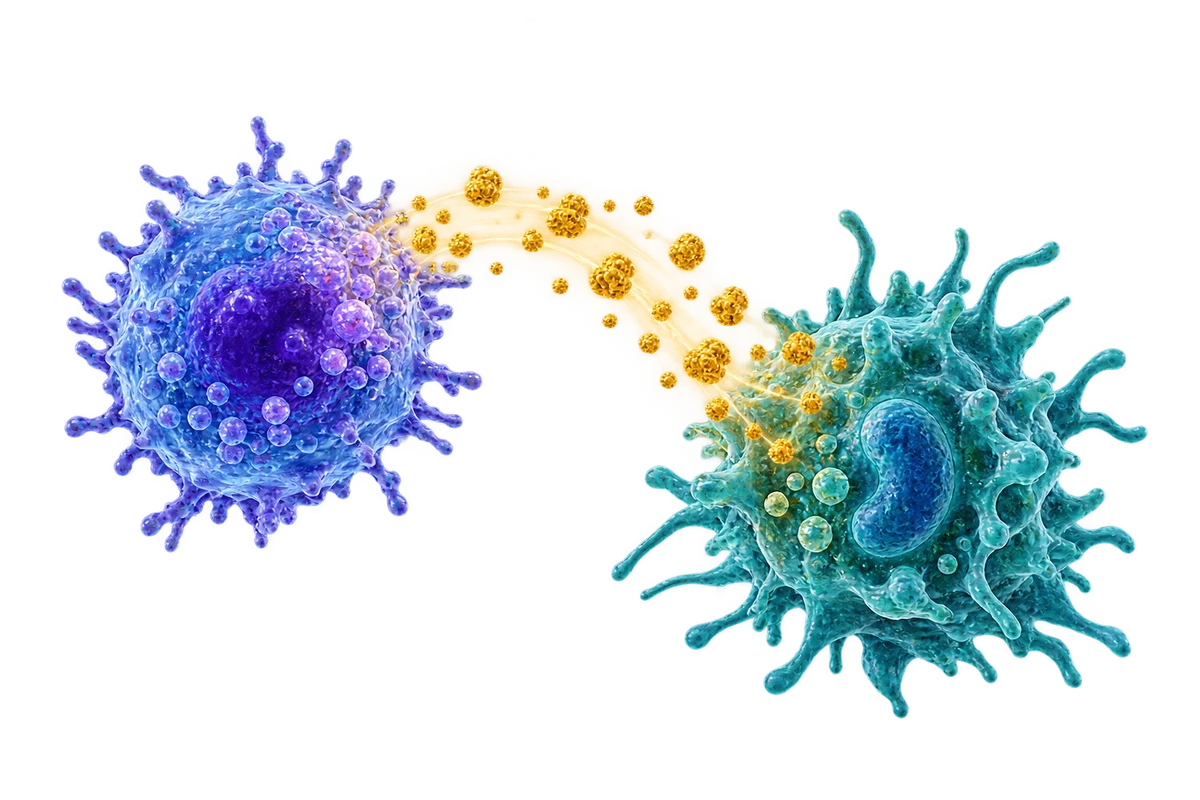
NK cells encounter potential targets and assess their surface ligands.
 Subscribe
IMMUNE CELLS
Natural killer cells are innate lymphocytes that help control infected and abnormal cells. They integrate activating and inhibitory signals, deliver cytotoxic molecules to selected targets and release cytokines that coordinate defense. Their responses are tightly regulated to limit injury to healthy tissues.
Back to all innate immune cells →Natural killer cells are lymphocytes with cytoplasmic granules containing perforin and granzymes. Unlike conventional T cells, they do not use a rearranged antigen-specific T-cell receptor. They can respond without prior antigen-specific sensitization, while still requiring appropriate activating signals.
NK cells assess the balance between stress-related ligands and inhibitory signals, including those associated with self MHC class I. Some also recognize antibody-coated targets through CD16. Their activity combines selective cell killing with cytokine production and interactions with other immune cells.
Target selection depends on integrated signals rather than one universal marker.
NK cells encounter potential targets and assess their surface ligands.
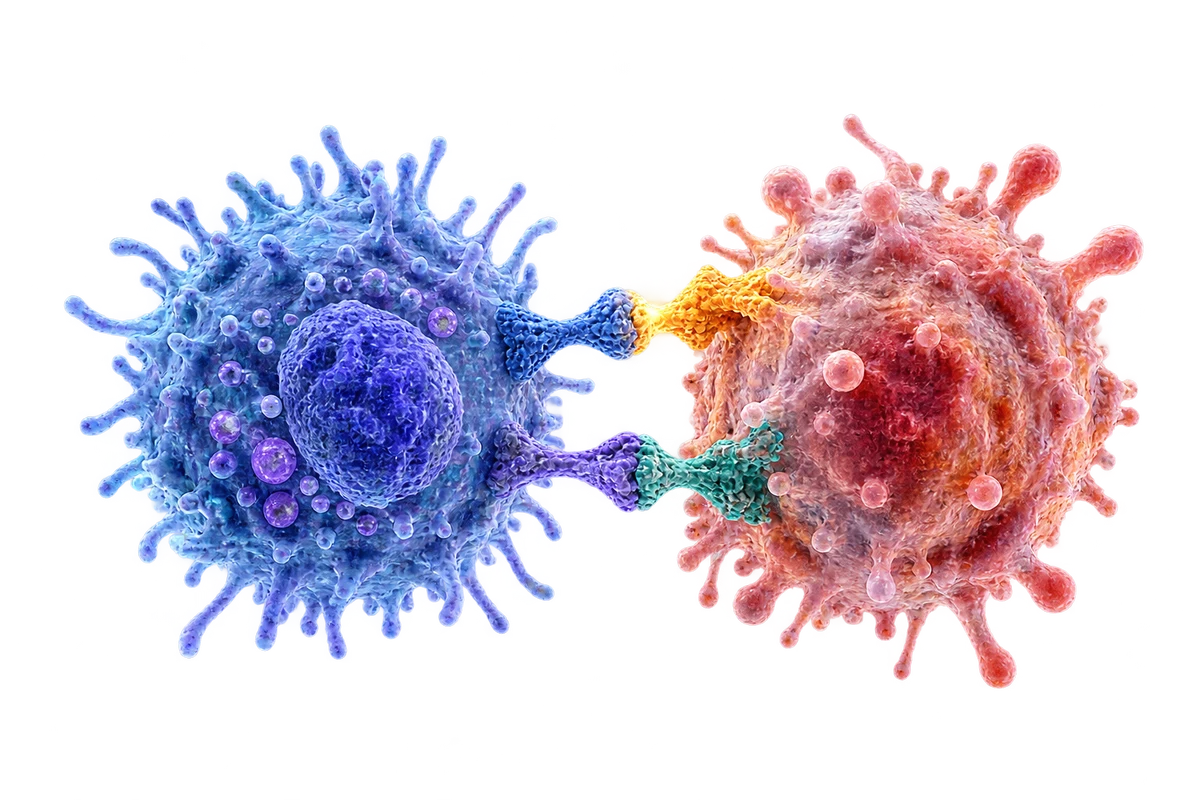
Activating and inhibitory receptors together determine whether a response proceeds.

A focused contact allows release of perforin and granzymes toward the selected target.

Cytotoxic pathways can trigger controlled target-cell death; the NK cell can detach.
Specialized cellular functions contribute to coordinated immunity.
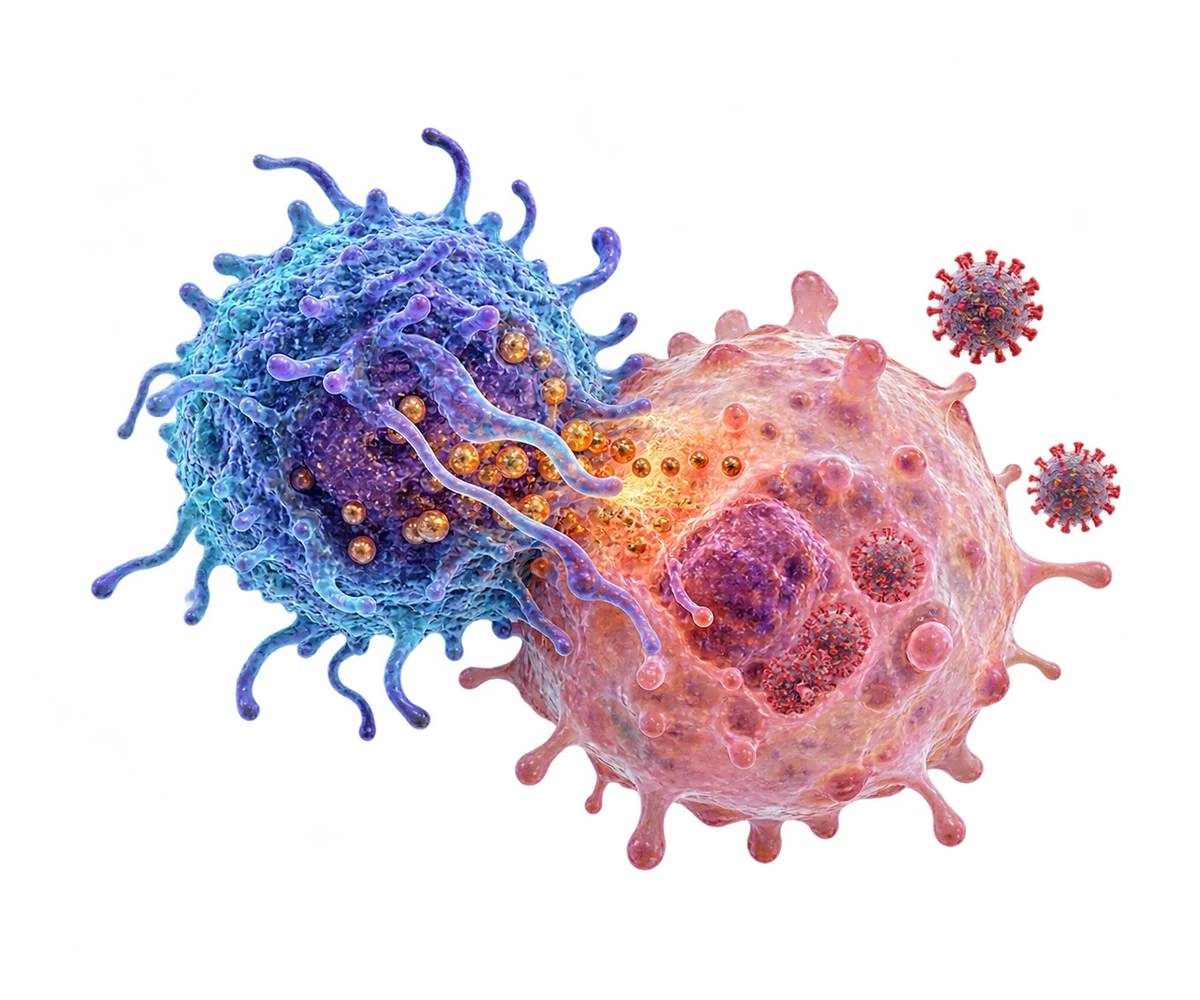
NK cells can recognize and eliminate selected infected cells during early immune responses.
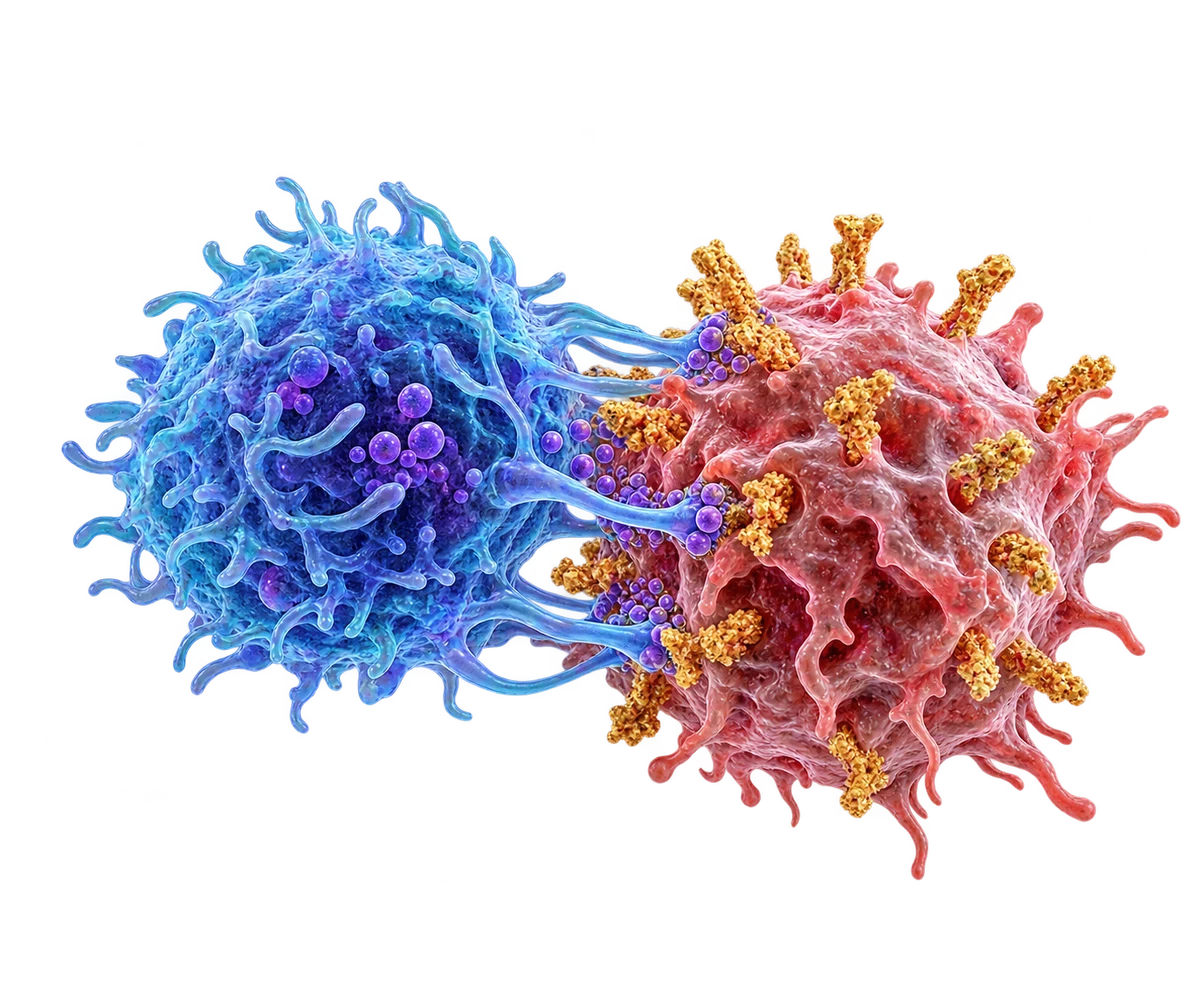
Stress ligands and reduced inhibitory signaling can make some tumor cells susceptible.
Cytokines such as interferon-γ help shape responses by macrophages and other cells.

CD16 can bind antibody Fc regions on coated targets and support antibody-dependent killing.

Aging can alter NK-cell populations, receptor patterns and functional responses.
Artwork illustrates the main mechanisms schematically; molecular sizes, colors and distances are not literal.